
Every windshield replacement on ADAS-equipped vehicle requires a forward-facing camera calibration. Auggie Air is the mobile FFC calibration solution that gets the job done.
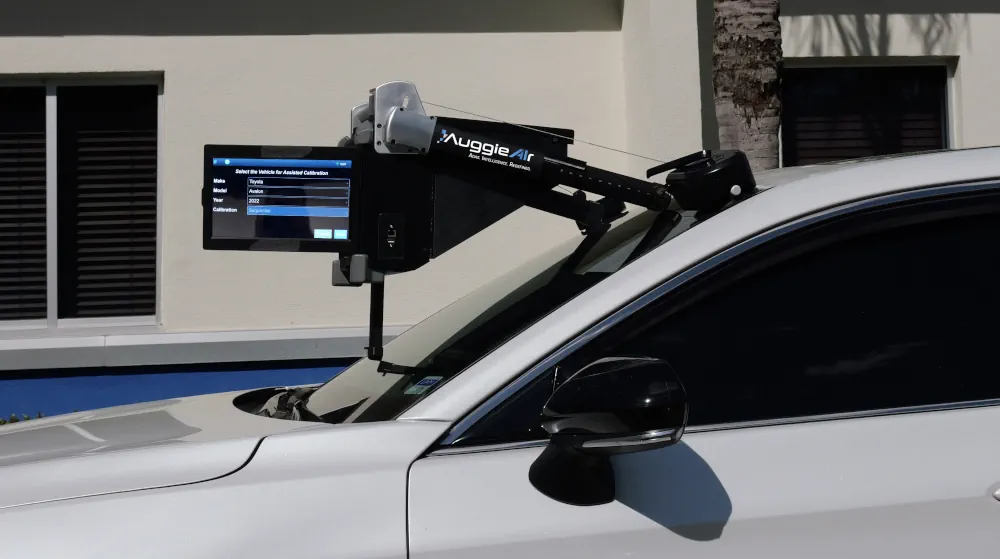
Auggie Air is the automotive industry's most advanced mobile forward-facing camera ADAS calibration solution. Auggie Air mounts directly to the windshield, calibrating to OEM specs anywhere – a shop bay, a driveway, indoors, or outdoors. No floor targets, no controlled lighting, or dedicated space required. Calibrate anytime, anywhere.
Every windshield you replace on an ADAS-equipped vehicle requires a forward-facing camera calibration. The camera mounted behind the glass is the eye of every lane-departure, automatic emergency braking, adaptive cruise control, and collision-avoidance system on that vehicle. Move the glass, and the camera moves with it. The system must be calibrated before the vehicle is delivered, every time, on every brand, to OEM specification.
Traditional target setups were designed for fixed, controlled shop environments. The 250-square-foot floor space requirement, the level surface requirement, the lighting controls, the vehicle fuel and payload conditions: all of those were environmental constraints present in the physical target approach. A mobile glass technician working in a customer’s driveway cannot stage that. An independent glass shop running two bays cannot give up a fifth of their floor space. Subletting calibration was the only practical answer for years. With Auggie Air those constraints are a thing of the past.

Auggie Air: The Most Advanced Mobile FFC Calibration Device in the Industry
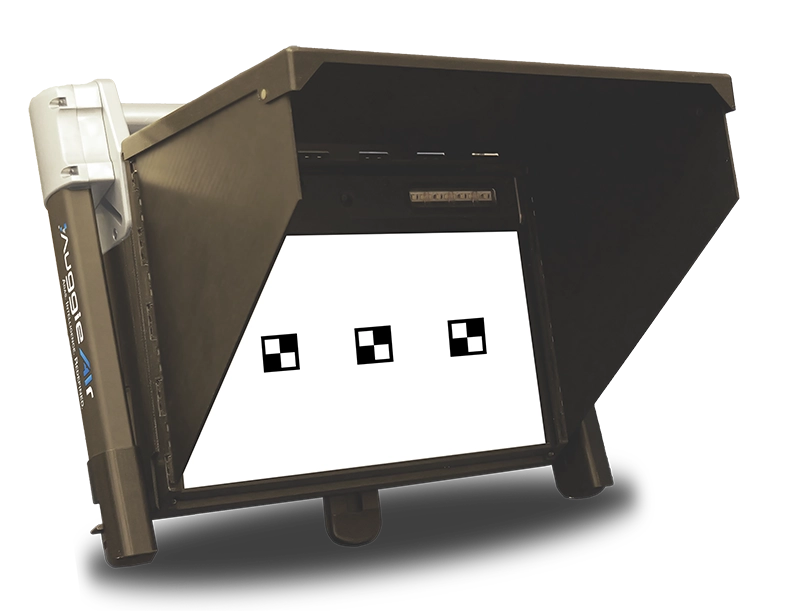
AirPro Diagnostics’ patented Auggie Air targeting device has been the standard for mobile forward-facing camera calibration since its debut at the Texas Auto Body Trade Show in September 2021. Auggie Air is the latest generation, built with every lesson from thousands of real-world calibrations across every business model in the industry.
Auggie Air is not just more portable. It is a ground-up redesign for the way glass professionals actually work: on mobile routes, in driveways, in small bays, in parking structures, in fleet yards, and anywhere else a windshield gets replaced. Every element of the device has been re-engineered for the field.
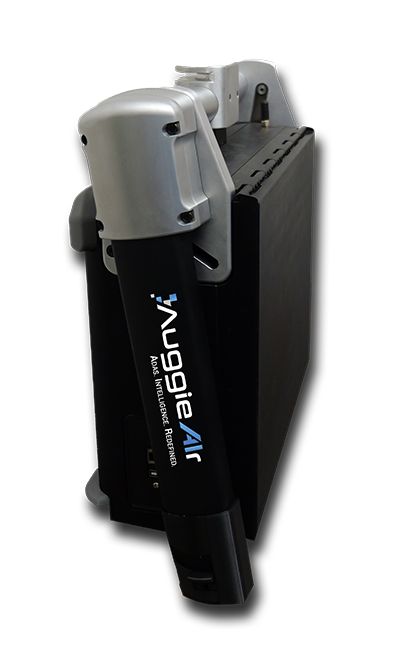
Lightweight and Portable
Auggie Air collapses to the size of a standard briefcase. Carry it between jobs, store it in a service van, and set it up in two to three minutes. Its collapsible, modular design also makes field repairs straightforward when they are needed.
Dual externally mounted Wi-Fi antennas provide improved wireless connectivity, so the device stays connected in environments where a standard single-antenna setup would drop signal.
Enhanced Battery Performance
Quick charge capability gets the device back to full faster between jobs. A built-in LED display and integrated UI give technicians real-time battery status before and during every calibration.
USB-C charging works with the same cables your mobile devices use, and the battery can charge separately or while installed. Standard outlet charging is also supported for in-shop use. One device, every charging scenario.
Larger, Intuitive Operator Screen
The Auggie Air operator screen is 65% larger than the previous generation. The redesigned graphical interface shows battery status, calibration progress, and workflow steps clearly, with fewer taps required to move through the procedure. Less reading, less uncertainty, faster calibrations.
Global Compatibility
Auggie Air is configurable for both US and international markets, with operator screens designed for country-specific vehicle setups. For glass MSOs and operations with cross-border reach, one device covers both markets without reconfiguration.
A Digital Targeting System That Goes Where the Work Is
The Auggie Air Digital Targeting System (DTS) renders the calibration target digitally and delivers it wirelessly to the forward-facing camera. There is no physical target board to store, transport, or stage. The target is always the correct size, always at the correct distance, and always properly aligned to the vehicle.
No specialized bay. No level floor requirement. No controlled lighting. No 250+ sq ft floor space. No physical target to store or transport.
Auggie Air mounts directly on the windshield. The footprint it requires is always the same as the vehicle itself. A calibration that used to require a controlled shop environment can now be performed in a driveway, a parking lot, a fleet yard, a dealership lane, or anywhere the vehicle is parked.
Auggie Air communicates wirelessly to the AirPro device or compatible scan tool throughout the calibration. A US-based Brand Specialist joins remotely, guides the procedure to OEM specification, and confirms the result. The documentation is generated automatically, aligned to the OEM position statement for the specific vehicle, and stored in ORION. The vehicle is ready to deliver.
AirPro commits to responding to every assist request within 10 minutes. Most requests are attended to within 90 seconds. A mobile tech working in a customer’s driveway is never left waiting for a specialist to become available.
AirPro's Auggie Air is the Solution for Businesses of Any Size
Independent Glass Shops
Single-location auto glass shops carry the full ADAS workload for every windshield they replace. Auggie Air and US-based Brand Specialist support bring industry-leading forward-facing camera calibration into the bay, so an independent shop has the same calibration capability as a national operator. Documentation is captured against the OEM position statement and made available for the insurance record on every job.
Mobile Glass Tech
Mobile technicians work where the vehicle is parked: the driveway, the parking lot, the fleet yard, the dealership lane. Auggie Air and the AirPro device go where the work is, and a US-based Brand Specialist joins the call to run the calibration. AirPro commits to responding within 10 minutes of every assist request, and a majority of requests are attended to within 90 seconds, so a mobile tech is never left waiting.
Glass MSOs
Multi-location auto glass operations get consistent forward-facing camera calibration coverage across every shop and every mobile route. Documentation generates against the OEM position statement and is built so your shop can pass DRP audits. A dedicated AirPro Representative coordinates coverage, training, and reporting across the network.
AirPro is the trusted partner for auto glass shops doing OEM-quality replacement work, from single-location independents to mobile routes to large glass MSOs. Industry-leading forward-facing camera calibration, US-based Brand Specialist support on every job, and full insurance documentation aligned to OEM position statements and DRP audit requirements.
AirPro does not have direct relationships or agreements with insurance companies. We support all our customers in meeting their DRP compliance and documentation requirements, and our customers usually participate in DRP programs including State Farm, Allstate, GEICO, Progressive, and USAA.
What The Auggie Air DTS Delivers for Your Business
Complete Calibration in Every Job
Every windshield your shop replaces on an ADAS-equipped vehicle is a calibration job. Auggie Air provides high-accuracy FFC calibrations at the point of installation, with Brand Specialist support and OEM-documented results. Faster repair cycles mean more vehicles completed per day.
Faster Workflows, More Capacity
Decreased cycle time per vehicle means your bays and mobile routes handle more jobs. Brand Specialist response within 10 minutes keeps work moving without delay. A setup time of two to three minutes means Auggie Air adds capability without adding a meaningful step to the workflow.
In-House Calibration Capability
Bringing calibration in-house with Auggie Air eliminates subletting delays and their associated costs. Your shop controls the schedule, the quality, and the documentation from first cut to delivered vehicle.
Insurance and DRP Documentation
Documentation is generated automatically, timestamped, VIN-specific, and aligned to the OEM position statement. Built to pass DRP audit requirements and satisfy insurance carrier expectations on every job, from a single-location shop to a national MSO network.
OEM FFC Calibration Requirements: Windshield Replacement
Every major vehicle manufacturer publishes position statements that define when forward-facing camera calibration is required. For auto glass professionals, the trigger is consistent across all major brands: any time a windshield is removed and replaced on a vehicle equipped with forward-facing ADAS sensors, calibration is required before the vehicle is delivered. This requirement is not based on whether warning lights are present. It is based on the repair performed.
Disclaimer: The information provided on this page is for educational purposes only. Always validate against the OEM’s authorized positioning statements and directives at their own website or an authorized organization’s website. AirPro may not always have the latest information on this website.
General Motors
Brands: Chevrolet, Buick, GMC, Cadillac
WHEN CALIBRATION IS REQUIRED
GM’s position statement requires forward-facing camera calibration after any windshield replacement on a vehicle equipped with camera-based ADAS features. The calibration is required regardless of whether ADAS warning lights are present at the time of service.
CALIBRATION REQUIRED
Forward-facing camera calibration for all camera-based ADAS systems, including Forward Collision Alert, Lane Keep Assist, Automatic Emergency Braking, and Adaptive Cruise Control. Static calibration procedure performed to GM service information specifications.
SOURCE
GM Advanced Driver Assistance Systems Consideration position statement (March 2026); I-CAR CRN-576, Additional Calibration Requirements: General Motors; GM service information for specific vehicle and system configuration.
Ford / Lincoln
Brands: Ford, Lincoln
WHEN CALIBRATION IS REQUIRED
Ford’s May 2026 ADAS Repair Technical Imperatives position statement requires a post-repair scan and forward-facing camera calibration after any windshield replacement on ADAS-equipped vehicles. Ford explicitly states that calibration is required even when no ADAS warning lamps are active.
CALIBRATION REQUIRED
Forward-facing camera calibration covering the Ford Co-Pilot360 system suite. Calibration procedure follows FDRS service information for the specific model and system configuration. Post-calibration verification of ADAS functionality required.
SOURCE
I-CAR CRN-2426, Ford/Lincoln Position Statement, ADAS Integrity And Repair Technical Imperatives (May 2026); Ford FDRS calibration procedures.
Toyota / Lexus
Brands: Toyota, Lexus
WHEN CALIBRATION IS REQUIRED
Toyota requires forward-facing camera calibration after windshield replacement on vehicles equipped with Toyota Safety Sense. Calibration is performed per the OEM repair manual for the specific model and system configuration, and typically requires a post-calibration dynamic learning drive cycle.
CALIBRATION REQUIRED
Toyota Safety Sense: forward recognition camera calibration for Pre-Collision System, Lane Departure Alert, Automatic High Beam, and Radar Cruise Control. Some models require both static calibration and a dynamic learning drive to complete the procedure.
SOURCE
Toyota/Lexus windshield replacement and ADAS calibration service requirements; I-CAR RTS model-specific resources.
Honda / Acura
Brands: Honda, Acura
WHEN CALIBRATION IS REQUIRED
Honda’s position statement notes that driver assistive systems often will not display DTCs even when calibration is required after windshield replacement. Honda requires calibration based on the repair performed, not based on warning lamp status. Honda Pro First certified shops follow Honda service information.
CALIBRATION REQUIRED
Honda Sensing and AcuraWatch: forward-facing camera calibration for Collision Mitigation Braking System, Road Departure Mitigation, Lane Keeping Assist System, and Traffic Sign Recognition. Procedure follows Honda service information for the specific model.
SOURCE
Honda/Acura pre- and post-repair scanning and calibration position statement; I-CAR CRN-1126, Honda/Acura Position Statement; Honda service information for model-specific procedure.
Subaru
Brands: Subaru
WHEN CALIBRATION IS REQUIRED
Subaru requires EyeSight calibration after windshield replacement on all EyeSight-equipped vehicles. Subaru’s position statement specifies that calibration is required even if the EyeSight warning light is not illuminated, and that calibration results must be verified by a road test to confirm dynamic system performance.
CALIBRATION REQUIRED
EyeSight stereo camera calibration: both left and right cameras must be calibrated as a matched set after windshield replacement. Post-calibration road test required to verify dynamic EyeSight performance on all equipped models.
SOURCE
I-CAR CRN-1623, Calibration Research Tips, Subaru EyeSight; Subaru service information for EyeSight calibration procedures.
Hyundai / Kia / Genesis
Brands: Hyundai, Kia, Genesis
WHEN CALIBRATION IS REQUIRED
Hyundai, Kia, and Genesis require forward-facing camera calibration after windshield replacement on vehicles equipped with SmartSense or Drive Wise ADAS systems. OEM position statements and certified program documentation specify calibration as a required step on all applicable models.
CALIBRATION REQUIRED
Front camera calibration for Forward Collision-Avoidance Assist, Lane Keeping Assist, and Driver Attention Warning. Calibration procedure follows OEM service information for the specific model and system configuration.
SOURCE
Hyundai/Kia/Genesis OEM ADAS calibration requirements and windshield replacement position statements; I-CAR RTS model-specific resources.
Nissan / INFINITI
Brands: Nissan, INFINITI
WHEN CALIBRATION IS REQUIRED
Nissan requires forward-facing camera calibration after windshield replacement on vehicles equipped with Safety Shield 360 systems. Calibration is required based on the repair performed, per Nissan service information for the specific model.
CALIBRATION REQUIRED
Front camera calibration for ProPILOT Assist, Intelligent Emergency Braking, and Lane Departure Warning. ProPILOT-equipped models may also require a post-calibration road test to complete the dynamic learning procedure.
SOURCE
I-CAR CRN-420, Nissan Position Statement; Nissan/INFINITI service information for windshield replacement and camera calibration procedures.
Stellantis
Brands: Jeep, Dodge, Chrysler, Ram, FIAT, Alfa Romeo
WHEN CALIBRATION IS REQUIRED
Stellantis requires forward-facing camera calibration after windshield replacement on vehicles equipped with camera-based ADAS systems. Security gateway authentication is required for scan tool access on late-model Stellantis vehicles. Calibration procedure is documented in the vehicle-specific service manual.
CALIBRATION REQUIRED
Front-facing camera calibration for Forward Collision Warning, Automatic Emergency Braking, Lane Departure Warning, and Adaptive Cruise Control. Security gateway authentication handled through AirPro brand-authenticated tooling.
SOURCE
I-CAR FCA/Stellantis ADAS Information Hub; Stellantis service information for camera calibration after windshield replacement.
BMW / MINI
Brands: BMW, MINI
WHEN CALIBRATION IS REQUIRED
BMW requires forward-facing camera calibration after windshield replacement on vehicles equipped with Active Driving Assistant systems. Security gateway authentication is required for diagnostic access on late-model BMW vehicles. Calibration procedure is configuration-specific and is identified through BMW-authorized diagnostic tooling.
CALIBRATION REQUIRED
Active Driving Assistant camera calibration: forward-facing camera for Active Cruise Control, Lane Departure Warning, Collision Warning, and Speed Limit Information. BMW uses both static and dynamic calibration methods depending on vehicle configuration.
SOURCE
I-CAR CRN-2337, BMW Vehicles on the RTS OEM Calibration Requirements Search; BMW service information for windshield replacement and camera calibration.
Mercedes-Benz
Brands: Mercedes-Benz
WHEN CALIBRATION IS REQUIRED
Mercedes-Benz requires forward-facing camera calibration after windshield replacement on vehicles equipped with Active Safety systems. XENTRY security gateway authentication is required for diagnostic and programming access on current-generation vehicles. Calibration procedure follows Mercedes-Benz approved service information.
CALIBRATION REQUIRED
Active Safety camera calibration: forward-facing stereo camera for Active Brake Assist, Active Steering Assist, and Adaptive Cruise Control. Security gateway authentication handled through AirPro brand-authenticated tooling on the standard calibration path.
SOURCE
Mercedes-Benz ADAS calibration requirements for windshield replacement; Mercedes-Benz XENTRY security gateway requirements; I-CAR RTS model-specific resources.
Source information compiled from I-CAR Repairability Technical Support (RTS) published articles, OEM position statements, and OEM service information, available at rts.i-car.com and oem1stop.com. Content current as of June 2026. Always verify against current OEM service information for the specific vehicle being serviced.
See How It Works in 3 Simple Steps
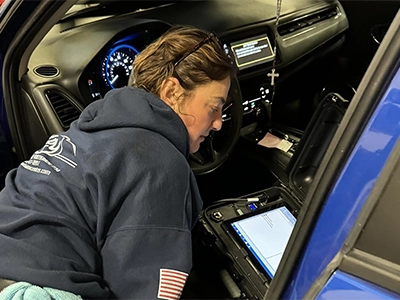
Connect
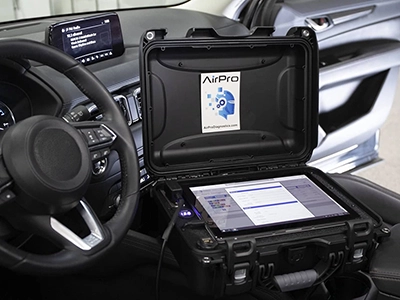
Your technician connects the AirPro device to the vehicle in your bay. One click opens an assist when the work calls for one.
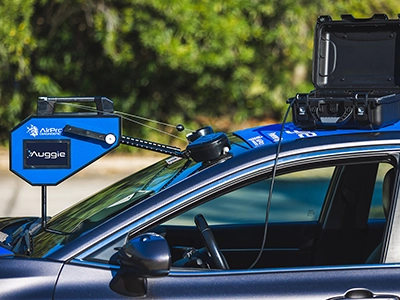
Scan
Pre-scans, Diagnostic Scans, and Completion Scans run on the AirPro device with brand-authenticated tooling. A US-based Brand Specialist with in-depth experience on the brand joins live when the procedure calls for an expert in the loop.
Document
Documentation generates automatically against the OEM position statement, timestamped, and aligned to DRP audit requirements.
AirPro does not have direct relationships or agreements with insurance companies. We support all our customers in meeting their DRP compliance and documentation requirements, and our customers usually participate in DRP programs, including State Farm, Allstate, GEICO, Progressive, and USAA.
Two Ways to Build Your AirPro Glass Program
AirPro Flex
Starting at $299/mo
Your technicians run forward-facing camera calibrations with Auggie Air, and a US-based Brand Specialist is available on demand when they need expert guidance. Built for glass shops and mobile techs ready to run calibrations with expert backup available.
AirPro Assist
Starting at $475/mo
A US-based Brand Specialist is live on every calibration from mount to delivery confirmation, guiding the full procedure and completing the documentation. Built for operations that want fully-guided coverage on every job with no ADAS expertise required.
Not sure which plan fits your operation? If your technicians are comfortable running calibrations with expert backup available on demand, start with Flex. If you want a Brand Specialist guiding every single calibration from start to finish, with no ADAS expertise required from your tech, start with Assist. An AirPro Representative will work through your job volume, number of routes or locations, and insurance program requirements to recommend the right fit.
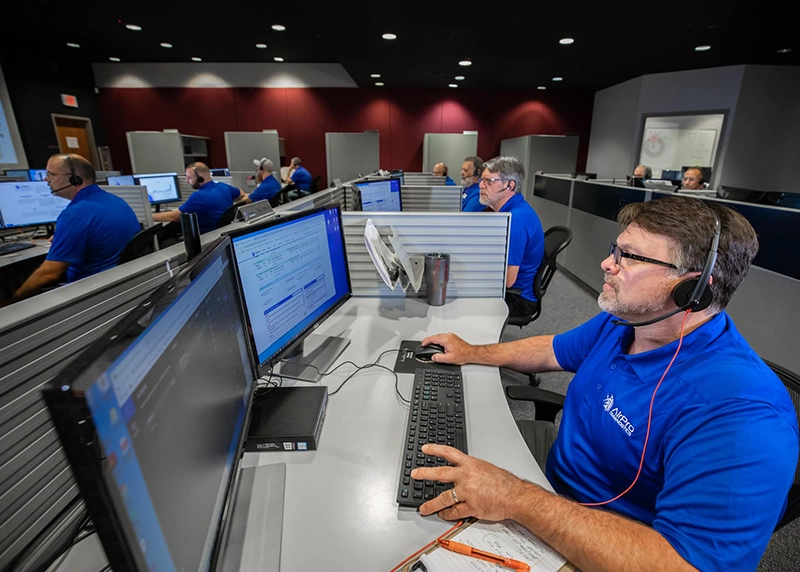
US-Based Brand Specialists. Available Within Minutes.
AirPro’s Brand Specialists are assigned by brand. They are not general support staff. Each Specialist has daily, hands-on experience with the OEM platforms they support, including the specific calibration procedures that follow windshield replacement on ADAS-equipped vehicles. When one joins your technician’s session, they know the vehicle, the system, and the steps before the call begins.
They know which models require a dynamic learning drive after static calibration. They know which systems will not show a warning light even when calibration is required. They know what the OEM position statement says for that specific brand and how to document the result so it satisfies insurance and DRP audit requirements.
On AirPro Flex, a Brand Specialist is one click away when your technician needs expert guidance. On AirPro Assist, a Brand Specialist is live on every calibration from mount to delivery confirmation, guiding the procedure and completing the documentation at the close.
Every session is recorded, both the call and the screen. Every record is stored in ORION. AirPro commits to responding within 10 minutes of every assist request, and the majority of requests are attended to within 90 seconds. Your technician keeps working.
What You Get With AirPro
Auggie Air Device, included free
No upfront hardware costs. Ships ready to use. Collapses to briefcase size for transport between jobs or locations.
US-based Brand Specialist support, one click away
Assigned by brand. Deep expertise on the OEM in your bay. Response within 10 minutes of every request, most within 90 seconds.
Forward-Facing Camera Calibration on every applicable vehicle
98% vehicle coverage across all major domestic, European, and Asian brands. No floor targets, no bay requirements, no controlled lighting. Indoors or outdoors, in a bay or in a driveway.
OEM position statement documentation on every job
Every calibration generates timestamped, VIN-specific documentation aligned to the OEM position statement. Built for insurance records and DRP audit requirements.
ORION, all calibration records centralized
Every Auggie Air calibration, Brand Specialist session, and diagnostic record stored in one platform. Accessible from any location or mobile route in your operation.
Security gateway authentication included
Late-model Stellantis, BMW, Mercedes-Benz, and other vehicles requiring gateway authentication handled through AirPro brand-authenticated tooling on the standard calibration path.
Dedicated AirPro Representative for MSOs
Multi-location glass operations receive a dedicated Representative who coordinates coverage, onboarding, and reporting across every shop and mobile route in the network.
AirPro Evergreen Warranty
AirPro stands behind every calibration performed through the platform. Documentation and accountability built in on every job.
Other Industries We Serve

Frequently Asked Questions
Does every windshield replacement require a calibration?
Yes, on any vehicle equipped with a forward-facing ADAS camera. The camera is mounted to or near the windshield, and removing and replacing the glass shifts the camera’s reference position. Every major OEM publishes a position statement requiring calibration after windshield replacement on ADAS-equipped vehicles, regardless of whether warning lights are active. The calibration requirement is based on the repair, not on fault code presence.
What makes Auggie Air different from traditional calibration setups?
Traditional physical target setups require 250+ square feet of floor space, a level surface, controlled lighting, specific fuel and payload conditions in the vehicle, and a permanent in-shop footprint. Auggie Air has none of those requirements. It mounts to the vehicle, communicates wirelessly, and renders the calibration target digitally. The footprint it requires is always the same as the vehicle itself. It works indoors or outdoors, in a bay or in a driveway, anywhere the vehicle is parked.
How long does an Auggie Air calibration take?
Setup takes two to three minutes. The calibration procedure time varies by vehicle brand and system configuration. A Brand Specialist is available to join and guide the procedure within 10 minutes of a request, and most requests are attended to within 90 seconds. The vehicle does not need to leave the install location.
Does AirPro work on all brands, or just certain ones?
AirPro provides 98% vehicle coverage across all major domestic, European, and Asian brands. Brand Specialists are assigned by brand, so the Specialist on your calibration has deep, daily experience on the specific OEM in your bay. Security gateway authentication for late-model Stellantis, BMW, Mercedes-Benz, and other vehicles requiring it is handled through AirPro’s brand-authenticated tooling on the standard path.
Will the documentation satisfy our insurance and DRP requirements?
Yes. Every calibration generates documentation that is timestamped, VIN-specific, and aligned to the OEM position statement for the vehicle and system. The documentation is built to satisfy insurance carrier expectations and DRP audit requirements. It is stored in ORION and accessible from any location or mobile route in your operation. AirPro does not have direct relationships with insurance companies, but our documentation is designed to meet the standards carriers and DRP programs require from shops.
What is the difference between AirPro Flex and AirPro Assist?
AirPro Flex (starting at $299/mo) is tech-led: your technicians perform the calibration with a US-based Brand Specialist available on demand when they need expert guidance. AirPro Assist (starting at $475/mo) puts a Brand Specialist live on every calibration from mount to documentation, guiding the full procedure step by step. No ADAS expertise is required from your technician on either plan. If your techs are confident running the procedure with backup available, Flex is the right fit. If you want complete guided coverage on every job with no expertise requirement, start with Assist.
Does Auggie Air work for mobile glass operations?
Yes. Auggie Air was specifically designed for mobile use. It collapses to briefcase size for transport, sets up in two to three minutes wherever the vehicle is parked, and requires no bay, no special surface, and no controlled environment. It works in driveways, parking lots, fleet yards, dealership lanes, and anywhere else a windshield gets replaced. The AirPro device and a wireless connection to a Brand Specialist travel with the technician.
Take Control of the FFC Calibration Process and the Revenue it Generates
From single-location independents and mobile glass technicians to large glass MSO networks, AirPro gives your operation industry-leading forward-facing camera calibration, US-based Brand Specialist support on every job, and full documentation aligned to OEM position statements and DRP audit requirements.