Most vehicles in your bay require ADAS calibration at some level, and few are getting it.
An estimated 65% of collision repairs require some form of ADAS calibration. Industry data suggests that only 35 to 40% of that work is actually getting done. That gap is not a technology problem. It is a process problem, and collision shops bear liability for it, regardless of whether the work was sublet or skipped.
AirPro Diagnostics provides a repeatable, documented process for pre-scans, diagnostic scans, ADAS calibrations, and completion scans on every repair order. A US-based Brand Specialist joins remotely if needed. Documentation is automatic, aligned with OEM position statement and formatted for DRP audits. The vehicle remains in your bay from start to finish, with no time or money lost shuttling it.

Does your shop perform any of these repairs?
- Front-End Collision Repair and Bumper Replacement
Front radar sensors supporting adaptive cruise control and automatic emergency braking sit at or behind the bumper fascia on most ADAS-equipped vehicles - Rear Bumper Work and Quarter-Panel Repair
Rear radar units for blind spot monitoring and rear cross-traffic alert require recalibration after bumper and quarter-panel work - Frame and Structural Repair
Any repair affecting sensor mounting points, frame straightening, unibody repair, panel replacement, shifts the reference geometry sensors depend on - Suspension Repair and Wheel Alignment
Changes in ride height and thrust angle shift the viewing angles of every forward and rear-facing sensor on the vehicle - Airbag Deployment and Module Replacement
Airbag deployment typically forces module and sensor replacement across multiple systems, each of which may require recalibration before the vehicle can be returned
If your shop performs any of the above, ADAS calibration requirements apply to that vehicle. The repairs are already in your workflow. The calibration process belongs there too.
What Is ADAS Calibration, and Why Does Collision Work Trigger It?
ADAS (Advanced Driver Assistance Systems) is the collective name for the safety technologies built into virtually every vehicle manufactured since 2016: automatic emergency braking, adaptive cruise control, blind spot monitoring, lane keep assist, rear cross-traffic alert, and more. Each of these systems depends on a network of sensors, cameras, and radar units that are calibrated to a precise reference geometry specific to that vehicle.
When collision work moves or disturbs any component that sits within range of those sensors, the sensor’s reference can shift. That shift does not always generate a fault code or illuminate a warning light. The vehicle drives and handles normally. The safety system does not perform as designed. A sensor pointed two degrees off center may interpret a vehicle in the next lane as being in the same lane, or may fail to detect a stopped vehicle ahead at the distance the system was designed to respond to.
This is why OEM position statements require calibration after front-end work, rear work, structural repair, suspension repair, and wheel alignment, not based on whether a warning light is present, but based on whether the repairs performed fall within categories the manufacturer identifies as calibration triggers. A scan tool cannot substitute for a calibration. A completion scan that returns no active fault codes is not confirmation that sensors are operating within OEM specification.
Pre-Scan, Post-Scan, and Why Both Matter
A collision shop’s ADAS workflow is not a single step at the end of the repair. It begins before disassembly and closes before the vehicle leaves the bay. Both scans serve a different purpose, and both are required by OEM position statements on vehicles equipped with ADAS.
The pre-repair scan identifies what is present on the vehicle and what condition it was in before your shop touched it. It captures active fault codes. It captures historical codes set before the vehicle arrived. And it captures any pending codes, which are the conditions the vehicle has detected but has not yet completed a full drive cycle to elevate to a confirmed fault. In a collision scenario, pending codes are particularly important: a vehicle that arrived on a tow truck has not completed a drive cycle, and conditions that will eventually set a full code may only appear as pending on arrival.
The post-repair completion scan confirms what condition the vehicle is in after the work is done. A clean completion scan is not confirmation that calibration was performed correctly or that sensors are operating within OEM specification. It confirms the absence of active fault codes. The difference matters significantly from a liability standpoint.
AirPro runs both. The pre-scan happens before disassembly. The completion scan runs after all repair and calibration work is finished. Both generate timestamped, VIN-specific documentation. Both are stored in ORION, searchable and shareable across locations. Both are formatted to meet DRP audit requirements.
Subletting the calibration does not transfer the liability.
The shop that accepted the keys bears primary responsibility for the completed repair. When a calibration is required on a vehicle your shop worked on, and that vehicle is later involved in an incident where a safety system fails to respond correctly, the liability attaches to the repair facility that performed the triggering work, not to a mobile calibration provider, a dealer, or a remote service your shop sublet to. This is not a contested point in the industry. It is the position of the collision repair community and the basis for ongoing advocacy efforts by SCRS and CIC.
A clean completion scan is not a green light. Several OEM position statements are explicit: sensors can be out of calibration after a collision repair without generating a fault code or illuminating a warning light. The absence of a warning light does not confirm the system is operating within OEM specification. Calibration must be performed based on the repairs done, not based on whether a code appears.
AirPro records both the phone call and the screen session for every remote diagnostic interaction, going back to 2016. That documentation is available to support your shop if a claim is ever disputed.
The Gap Between Required Work and Getting the Job Done
In 2026, an estimated 65% of collision repairs require some form of ADAS calibration. Industry data from Repairify suggests that somewhere between 35% and 40% of that work is actually getting done. Of the calibration requirements that AirPro communicates to shops, approximately 40 to 50% of the time the shop is hearing about that requirement for the first time. That figure climbs considerably for shops that only run a post-repair scan and skip the pre-scan.
The identification problem and the verification problem are not the same thing. Identification is knowing which sensors on which vehicles require calibration based on the damage location and the repairs performed. Verification is confirming the calibration was actually performed correctly. The industry has made progress on identification. Verification not as much.
AirPro addresses both. The pre-scan identifies conditions before work begins. The completion scan verifies conditions after repairs and calibration are complete. The Brand Specialist on the assist is accountable for the procedure they guided and the documentation they generated. A defined, repeatable process on every repair order is the foundation of a defensible liability position.
OEM ADAS Calibration Requirements: Collision and Structural Repairs
Every major vehicle manufacturer publishes position statements that define when ADAS calibration is required after a repair. Collision shops primarily handle front- and rear-end damage, structural and frame repairs, suspension work, and wheel alignment, core collision repair tasks. These requirements apply regardless of whether a fault code is present and pertain to the specific repairs performed on that vehicle, not to the vehicle’s general ADAS condition.
Disclaimer: The information provided on this page is for educational purposes only. You must always validate information against the OEM’s authorized positioning statements and directives at their own website or an authorized organization’s website. AirPro may not always have the latest information on this website.
General Motors
Brands: Chevrolet, Buick, GMC, Cadillac
WHEN CALIBRATION IS REQUIRED
GM’s Advanced Driver Assistance Systems Consideration position statement (March 2026) requires ADAS evaluation and calibration after repairs that affect sensor mounting locations, vehicle geometry, and suspension or steering components. Front-end collision work affecting the front fascia or bumper carrier, structural repairs, frame straightening, and wheel alignment are all identified trigger categories.
CALIBRATION REQUIRED
Front radar (Automatic Emergency Braking, Adaptive Cruise Control), forward-facing camera (Lane Keep Assist, Forward Collision Alert), rear radar (Blind Zone Alert, Rear Cross Traffic Alert), and surround-view systems depending on the repair zone and model configuration.
SOURCE
GM Advanced Driver Assistance Systems Consideration position statement (March 2026); I-CAR CRN-576, Additional Calibration Requirements: General Motors.
Ford / Lincoln
Brands: Ford, Lincoln
WHEN CALIBRATION IS REQUIRED
Ford’s May 2026 position statement defines an ADAS-related repair as any repair involving parts within the field of view or mounting zone of an ADAS sensor. Front-end collision, bumper and fascia replacement, structural repair, suspension work, and wheel alignment are all explicitly addressed. Ford requires a pre-repair scan, a post-repair scan, and calibration for all ADAS-related repairs, and states that a misaligned sensor may not immediately set a fault code.
CALIBRATION REQUIRED
Forward-facing camera and front radar (Ford Co-Pilot360: Pre-Collision Assist, Lane-Keeping System, Adaptive Cruise Control). Rear sensors (Blind Spot Information System, Rear Cross-Traffic Alert). Calibration procedures use Ford’s FDRS software.
SOURCE
I-CAR CRN-2426, Ford/Lincoln Position Statement, ADAS Integrity And Repair Technical Imperatives; Ford FDRS calibration procedures.
Toyota / Lexus
Brands: Toyota, Lexus
WHEN CALIBRATION IS REQUIRED
Toyota requires inspection and recalibration of ADAS sensors following collision repairs that affect bumper structures, front-end components, suspension geometry, or vehicle ride height. Toyota’s position statement also addresses the importance of pre- and post-repair scanning and notes that calibration requirements should be determined from the OEM repair manual for the specific model.
CALIBRATION REQUIRED
Toyota Safety Sense systems including the millimeter-wave radar (Pre-Collision System, Adaptive Cruise Control) and the forward recognition camera. Toyota typically requires static calibration followed by a dynamic learning drive depending on model configuration.
SOURCE
Toyota/Lexus ADAS and collision repair service requirements; I-CAR CRN-801 and model-specific I-CAR RTS resources.
Honda / Acura
Brands: Honda, Acura
WHEN CALIBRATION IS REQUIRED
Honda and Acura require calibration of ADAS sensors after collision repairs affecting the front bumper, front fascia, front subframe, and suspension components. Honda’s position statement notes that driver assistive systems often will not display DTCs during a vehicle scan unless there is damage to the applicable system, so inspection and calibration may be required even in the absence of fault codes.
CALIBRATION REQUIRED
Honda Sensing and AcuraWatch systems including the millimeter-wave radar (Collision Mitigation Braking, Adaptive Cruise Control) and the forward-facing camera (Road Departure Mitigation, Lane Keeping Assist).
SOURCE
Honda/Acura pre- and post-repair scanning position statement; I-CAR CRN-1126, Honda/Acura Position Statement: Pre- and Post-Repair System Scanning.
Subaru
Brands: Subaru
WHEN CALIBRATION IS REQUIRED
Subaru explicitly lists front-end collision, suspension work, and wheel alignment as calibration triggers for its EyeSight system. Subaru also directs technicians to calibrate after minor collisions regardless of whether the EyeSight warning light is illuminated, reinforcing the position that the absence of a fault code is not a substitute for calibration when triggering repairs have been performed.
CALIBRATION REQUIRED
EyeSight stereo cameras (Forward Collision Warning, Automatic Pre-Collision Braking, Adaptive Cruise Control, Lane Keep Assist, Lane Departure Warning). EyeSight cameras require both a static calibration and a road test to complete the calibration process.
SOURCE
I-CAR CRN-1623, Calibration Research Tips, Subaru EyeSight; Subaru ADAS and collision repair service requirements.
Hyundai / Kia / Genesis
Brands: Hyundai, Kia, Genesis
WHEN CALIBRATION IS REQUIRED
Hyundai, Kia, and Genesis maintain pre- and post-repair scanning position statements that require ADAS calibration after collision repairs affecting bumpers, front and rear fascias, suspension components, and any sensor mounting locations. These manufacturers specify that calibration procedures must follow OEM service information for the specific model and system configuration.
CALIBRATION REQUIRED
SmartSense and Drive Wise systems including front radar (Forward Collision-Avoidance Assist, Smart Cruise Control) and forward-facing camera (Lane Keeping Assist, Driver Attention Warning). Rear radar systems for Blind-Spot Collision Warning and Rear Cross-Traffic Collision Avoidance Assist.
SOURCE
Hyundai, Kia, and Genesis pre- and post-repair scanning position statements; model-specific I-CAR RTS resources.
Nissan / INFINITI
Brands: Nissan, INFINITI
WHEN CALIBRATION IS REQUIRED
Nissan’s published position statement mandates radar recalibration after any front-end repair that shifts, removes, or jolts the radar sensor. Nissan separately requires recalibration of ADAS sensors after suspension repairs that alter vehicle ride height or geometry, and after wheel alignment procedures. These requirements apply based on the work performed, not on fault code presence.
CALIBRATION REQUIRED
Safety Shield suite: front radar (Forward Emergency Braking, Intelligent Cruise Control, ProPILOT Assist) and rear radar (Blind Spot Warning, Rear Cross Traffic Alert). Nissan also requires post-alignment calibration on ProPILOT-equipped models.
SOURCE
I-CAR CRN-420, Nissan Position Statement, Required Radar Recalibration Post-Repair; Nissan/INFINITI ADAS service requirements.
Stellantis
Brands: Jeep, Dodge, Chrysler, Ram, FIAT, Alfa Romeo
WHEN CALIBRATION IS REQUIRED
Stellantis vehicles equipped with ADAS require recalibration after repairs to or near ADAS sensor locations, including front fascia and bumper work, quarter-panel repairs near rear radar, structural repairs, and suspension work. Stellantis documents calibration requirements in vehicle-specific service manuals under Recalibration of Sensors and Modules.
CALIBRATION REQUIRED
Front radar and camera systems (Adaptive Cruise Control, Forward Collision Warning, Lane Keep Assist). Rear radar (Blind Spot Monitoring, Rear Park Assist). Some systems require the PROXI alignment configuration procedure in addition to sensor calibration.
SOURCE
I-CAR FCA/Stellantis ADAS Information Hub; Stellantis vehicle-specific ADAS recalibration procedures.
Volkswagen / Audi
Brands: Volkswagen, Audi
WHEN CALIBRATION IS REQUIRED
Volkswagen and Audi require ADAS sensor calibration after front-end collision repairs, bumper replacements, structural repairs, and suspension work. Audi additionally requires that thrust angle be verified before any radar or camera calibration is performed, making wheel alignment a prerequisite step for calibration on Audi vehicles.
CALIBRATION REQUIRED
Front Assist radar and camera system (Adaptive Cruise Control, Emergency Assist, Lane Assist). Rear radar (Blind Spot Detection, Rear Traffic Alert). Calibration procedures for Audi are accessible through the Audi repair manual portal.
SOURCE
I-CAR CRN-1605, OEM Linking Pin, Wheel Alignment / Audi ADAS Clarification; VW/Audi ADAS calibration service requirements.
BMW / MINI
Brands: BMW, MINI
WHEN CALIBRATION IS REQUIRED
BMW requires ADAS recalibration after front-end collision repairs, bumper and fascia work, structural repairs, and suspension work. BMW calibration requirements are configuration-specific and are stored in the OEM diagnostic scan tool, which identifies all installed sensors and the required calibrations for the specific vehicle based on its build configuration.
CALIBRATION REQUIRED
Active Driving Assistant systems including forward-facing camera and radar (Active Cruise Control, Lane Departure Warning, Collision Warning). Rear radar (Active Blind Spot Detection). BMW uses static and dynamic calibration methods depending on the sensor and the specific model configuration.
SOURCE
I-CAR CRN-2337, BMW Vehicles on the RTS OEM Calibration Requirements Search; BMW ADAS and collision repair service requirements.
Source information compiled from I-CAR Repairability Technical Support (RTS) published articles and OEM position statements, available at rts.i-car.com and oem1stop.com. Content current as of June 2026. OEM requirements may be updated; always verify against OEM service information for the specific vehicle being serviced.
See How It Works in 3 Simple Steps
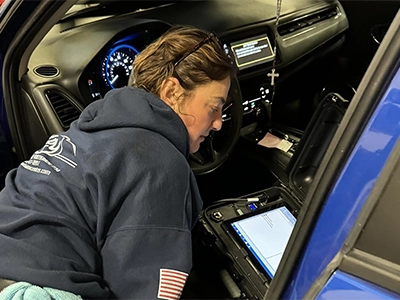
Connect
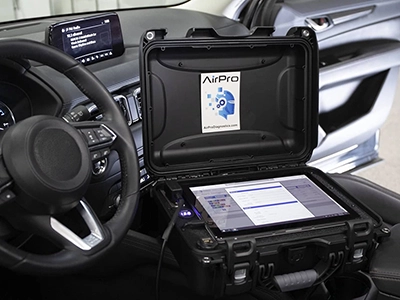
Your technician connects the AirPro device to the vehicle in your bay. One click opens an assist when the work calls for one.
Scan
Pre-scans, Diagnostic Scans, and Completion Scans run on the AirPro device with brand-authenticated tooling. A US-based Brand Specialist with in-depth experience on the brand joins live when the procedure calls for an expert in the loop.
Document
Documentation generates automatically against the OEM position statement, timestamped, and aligned to DRP audit requirements.
AirPro does not have direct relationships or agreements with insurance companies. We support all our customers in meeting their DRP compliance and documentation requirements, and our customers usually participate in DRP programs, including State Farm, Allstate, GEICO, Progressive, and USAA.
Two Ways to Add ADAS Calibration to Your Shop
AirPro Flex
Starting at $349/mo
Your technicians initiate pre-scans, diagnostic scans, and completion scans. A US-based Brand Specialist is available on demand when the procedure calls for one. Built for shops with technical staff ready to run the scan process with expert backup available.
AirPro Assist
Starting at $525/mo
A US-based Brand Specialist is live on every single scan, from pre-scan through completion, guiding your technician through codes, calibration requirements, and documentation start to finish. Built for shops that want fully-guided diagnostic coverage on every repair order with no ADAS knowledge required.
Not sure which fits? If your technicians are ready to initiate scans and want expert backup available when they need it, start with Flex. If you want a Brand Specialist guiding every repair order from pre-scan through completion with no ADAS knowledge required from your shop, start with Assist. An AirPro Representative will match you to the right plan based on your repair volume and workflow.
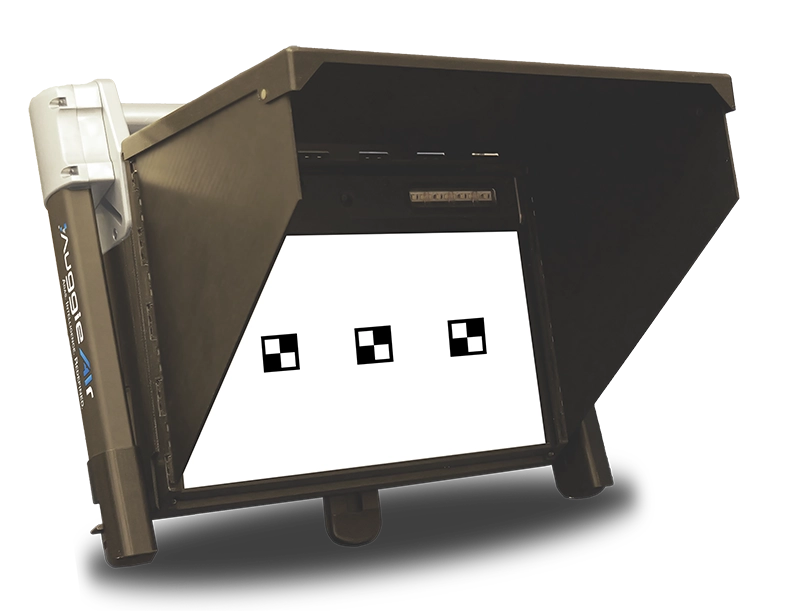
The Forward-Facing Camera calibration system That Goes Where the Work Is
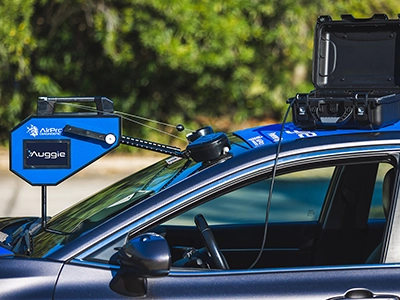
AirPro Diagnostics’ Auggie Air is a fully mobile digital targeting device that mounts to the windshield and renders the target for the forward-facing camera (FFC) calibration to OEM specification, wherever the vehicle is. No specialized bay, no floor targets, no controlled lighting required. Calibrate a vehicle’s FFC with Auggie Air anytime, anywhere, indoors or outdoors.
On AirPro Flex, a Brand Specialist is available on demand when your technician hits a wall on a code, a calibration procedure, or an unfamiliar system. On AirPro Assist, a Brand Specialist is live on every single scan, from pre-scan through completion, guiding your tech through codes, calibration requirements, and documentation from start to finish. No ADAS knowledge required from anyone at the shop.
Every remote diagnostic interaction is recorded, both the phone call and the screen session. Those recordings are retained and available to support your shop if a liability question ever arises. AirPro maintains insurance for its work and has explicit accountability language in its customer agreements. The documentation is not just a report. It is a defensible record.
No script. No call tree. No transfer to a supervisor. The Brand Specialist on the line is the one with hands-on, daily expertise on the brand in front of you.
What You Get With AirPro
AirPro Device, included free. No upfront hardware costs. Ships to your shop, ready on day one. Use it for every repair order.
Pre-Repair Scans on every applicable vehicle. Your technicians initiate pre-scans before disassembly. Know what the vehicle requires before work starts, every time.
Diagnostic Scans and ADAS Calibrations. Brand-authenticated tooling covering 98% of all vehicles on the road, including ICE, hybrid, PHEV, and BEV. A Brand Specialist guides the calibration when the procedure calls for one.
Completion Scans with audit-ready documentation. Every scan produces a timestamped, VIN-specific report aligned to the OEM position statement, formatted to meet DRP audit requirements. Attaches directly to the repair order and the insurance claim record.
ORION Diagnostic Management System. Every scan is stored, searchable, and shareable across all your locations. Full repair history on every VIN.
US-based Brand Specialists. On demand with Flex, live on every scan with Assist. Brand-specific expertise, real accountability, recorded sessions going back to 2016.
OEM-licensed software, available on request. When the work calls for OEM tooling specifically. No separate subscriptions or licensing fees for your shop to manage.
DRP-formatted documentation, generated automatically. Every scan and calibration aligns to the OEM position statement and is formatted to meet State Farm, Allstate, GEICO, Progressive, USAA, and other carrier DRP audit requirements.
98% vehicle coverage. ICE, hybrid, PHEV, and BEV. Every major platform in your bays today.
Other Industries We Serve

Frequently Asked Questions
Does my shop carry liability if I sublet the calibration to a mobile provider or dealer?
Yes. The shop that accepted the vehicle for repair bears primary liability for the completed repair, including any required calibrations. Subletting to a mobile calibration provider, a dealer, or a remote diagnostics service does not transfer that responsibility. This is the consistent position of the collision repair industry and the basis for ongoing advocacy efforts by SCRS and CIC. AirPro maintains insurance for its own work and records every remote session, but your shop’s liability position is determined by the work you accepted and the documentation your repair order carries.
A vehicle came back clean on the post-scan. Does that mean no calibration was needed?
No. A clean completion scan confirms the absence of active fault codes. It does not confirm that sensors are operating within OEM specification. Several OEM position statements are explicit that sensors can be out of calibration after a collision repair without generating a fault code or illuminating a warning light. Calibration must be performed based on the repairs done, front-end work, bumper replacement, structural repair, suspension repair, or alignment, not based on whether a code appears after the fact.
Why does wheel alignment trigger a calibration requirement?
Changes in thrust angle and steering position affect how forward-facing sensors interpret vehicle direction. A camera or radar sensor calibrated with the wheels at a specific geometry will not function correctly if the steering angle sensor registers a different center position after alignment. Several OEMs, including Audi, which requires thrust angle verification before any ADAS calibration, document this relationship explicitly. On vehicles equipped with adaptive cruise control, lane keep assist, or forward collision warning, post-alignment calibration is a documented OEM requirement.
What documentation does AirPro generate for the insurance claim?
Every scan and calibration generates a report that is timestamped, VIN-specific, and aligned to the OEM position statement. Documentation is formatted to meet the audit requirements of DRP programs including State Farm, Allstate, GEICO, Progressive, and USAA. Every interaction is recorded, both the phone call and the screen session, and stored in ORION, searchable and shareable across your locations. AirPro does not have direct relationships or agreements with insurance companies, but our customers consistently use AirPro documentation in DRP compliance workflows without issue.
Does the vehicle need to leave my bay for the calibration?
No. The AirPro device connects directly to the vehicle in your bay. A US-based Brand Specialist joins the session remotely when the procedure calls for one. The vehicle stays on your floor from pre-scan through completion scan. No transport, no third-party facility, no cycle time lost to a sublet.
What is the difference between AirPro Flex and AirPro Assist?
AirPro Flex (starting at $349/mo) is tech-led: your technicians initiate scans and a Brand Specialist is available on demand when a code is unusual, a calibration procedure needs an OEM walkthrough, or the repair requires it. AirPro Assist (starting at $525/mo) puts a Brand Specialist live on every scan, from pre-scan through completion, guiding your tech through codes, calibration requirements, and documentation from start to finish. No ADAS knowledge required from your shop. If your technicians are ready to run scans, start with Flex. If you want a Specialist on every repair order from day one, start with Assist.
Can AirPro cover the brands my shop sees most?
AirPro covers 98% of all vehicles on the road, including all major domestic and import brands: GM, Ford, Stellantis, Toyota, Honda, Subaru, Nissan, Hyundai, Kia, Genesis, Volkswagen, Audi, BMW, MINI, Mercedes-Benz, Volvo, and more. Brand Specialists are assigned by brand, the Specialist on your assist has daily, hands-on experience with the specific brand in front of your technician. OEM-licensed software is available on request when the work calls for it.
Take control of your cycle time and be the one-stop shop your customers are looking for.
Tell us about your shop, and we will show you how AirPro gives your team a repeatable, documented ADAS calibration process for every repair order, without adding headcount, equipment overhead, or sending the vehicle out.