Alignment. Suspension. Brakes. Steering. Airbags. For a general repair shop, almost every service category is an ADAS trigger.
The work mentioned above is just a few examples of the work a general repair shop performs that affects the cameras, radar, and sensors that support lane-keeping, emergency braking, and adaptive cruise control. OEM position statements require calibration on these systems before the vehicle leaves the shop regardless of whether a warning light appears.
AirPro connects your technician to a US-Based Brand Specialist with expertise in the specific vehicle brand in your bay. The vehicle never leaves your shop. Your technician handles the physical work. AirPro delivers the remote scanning, diagnostics, programming, and ADAS calibration depth, as well as all required documentation, ensuring a safe and complete repair.
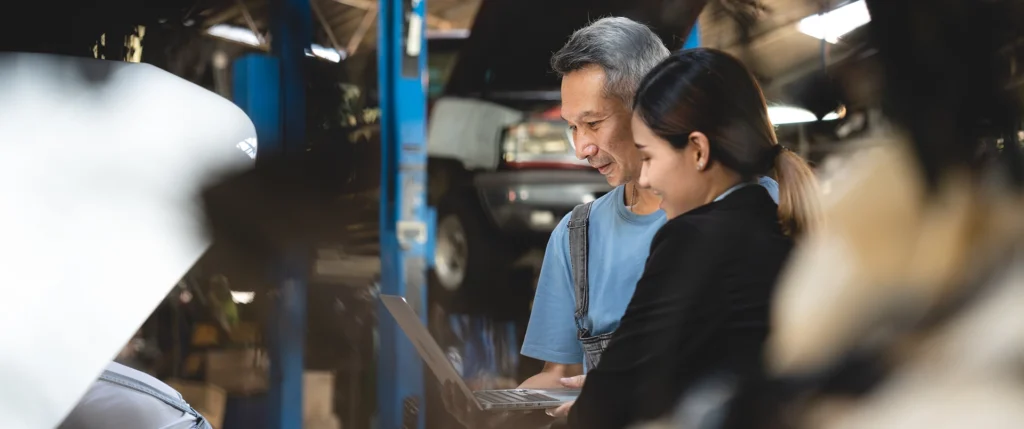
Does your shop perform any of these services?
- Wheel Alignment
At least 11 of 28 North American OEMs require ADAS calibration after alignment - Suspension & Steering Repair
Ride height or geometry changes shift sensor aim - Windshield & Glass Replacement
Forward-facing camera mounts directly to the windshield on most ADAS vehicles - Bumper Removal / Reinstallation
Front radar sits at or behind the bumper fascia on most platforms
If any of the above applies, ADAS calibration requirements apply to that vehicle. Keep reading.
What Is ADAS Calibration, and Why Does It Matter for Your Shop?
Every ADAS sensor, from cameras to radars, is calibrated to aim at a precise point in space relative to the vehicle’s geometry. When you change ride height through a suspension repair, adjust the thrust angle through an alignment, replace the windshield the camera mounts to, or reinstall the bumper the radar sits behind, that aiming reference shifts. A sensor out of calibration may not set a warning light or fault code. It will simply deliver inaccurate data to the vehicle’s safety systems (automatic braking, lane-keeping, collision warning) without alerting the driver or your technician.
Recalibrating a sensor requires brand-authenticated tooling, OEM-specific procedures, and in many cases a physical target or dynamic drive cycle. It cannot be done with a standard scan tool. That is the capability gap AirPro fills without requiring your shop to hire an ADAS specialist or purchase dedicated calibration equipment.
Your Vehicle Mix Has Already Changed
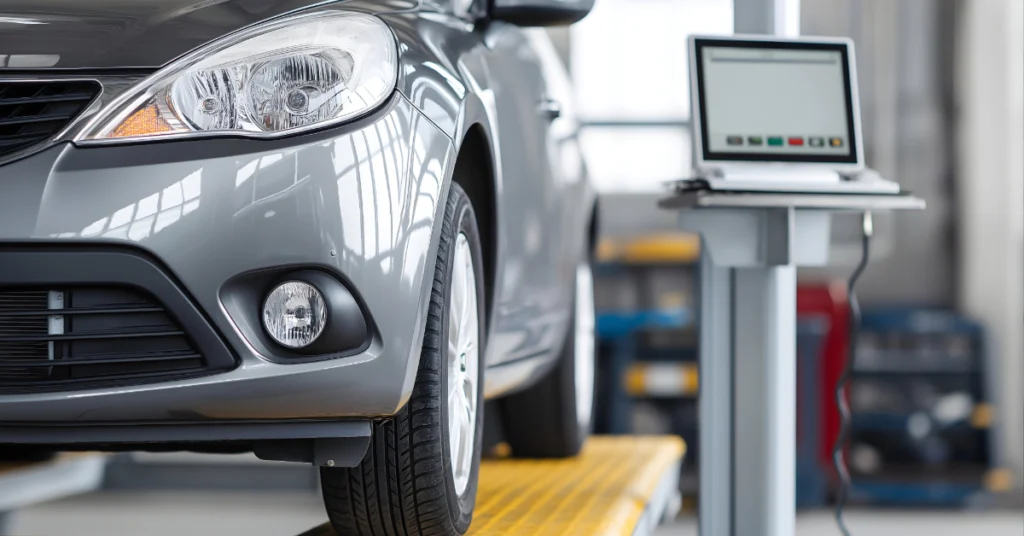
By model year 2018 to 2019, the majority of new vehicles sold in North America shipped with standard ADAS packages (forward collision warning, automatic emergency braking, lane keep assist, and adaptive cruise control). A general shop servicing vehicles from the past six to eight years is routinely seeing ADAS-equipped vehicles. This is not a specialty niche. It is your standard vehicle mix.
Consider a shop running 80 to 100 repair orders a month: if 40% of those vehicles are ADAS-equipped, that is 32 to 40 vehicles per month that may carry a calibration requirement tied to work already on your lift. Most of those requirements go unmet or get subbed out to a dealer. That is the revenue and the customer relationship leaving your shop.
If the work triggers a calibration requirement, the last shop to touch the vehicle carries the liability.
Several OEM position statements are explicit: a sensor can be out of calibration after alignment, suspension, or glass work without generating a fault code or illuminating a warning light. The vehicle will drive and feel completely normal. The ADAS safety system will not perform as designed.
If that vehicle is involved in an incident and an investigation determines the relevant safety system was not functioning correctly, the liability attaches to the last shop that performed the triggering work, whether that shop knew about the calibration requirement or not. The only protection is a documented, completed, OEM-required calibration.
AirPro generates that documentation automatically, timestamped, VIN-specific, aligned to the OEM position statement, every single time.
OEM ADAS Calibration Requirements
A general repair shop performs the exact services OEMs name as calibration triggers. The entries below cover the ten major manufacturer groups and confirm which services in your shop require a calibration follow-up, which systems are affected, and where the requirement is documented. Every entry reflects routine general-shop work: wheel alignment, suspension and steering repair, windshield replacement, and bumper-adjacent sensor work.
Disclaimer: The information provided on this page is for educational purposes only. You must always validate information against the OEM’s authorized positioning statements and directives at their own website or an authorized organization’s website. AirPro may not always have the latest information on this website.
General Motors
Brands: Chevrolet, Buick, GMC, Cadillac
WHEN CALIBRATION IS REQUIRED
GM’s Advanced Driver Assistance Systems Consideration position statement (March 2026) specifies that wheel, tire, suspension, and steering changes can affect ADAS performance and require a follow-on calibration. GM also requires recalibration of the forward-facing camera after a windshield replacement on equipped vehicles.
CALIBRATION REQUIRED
The forward-facing camera and radar support Forward Collision Alert, Automatic Emergency Braking, and Lane Keep Assist. A misaligned sensor does not always set a fault code.
SOURCE
GM Advanced Driver Assistance Systems Consideration position statement (March 2026); I-CAR CRN-576, Additional Calibration Requirements: General Motors; I-CAR CRN-801, Calibration After Windshield Replacement.
Ford / Lincoln
Brands: Ford, Lincoln
WHEN CALIBRATION IS REQUIRED
Ford’s May 2026 position statement defines an ADAS-related repair as work on ADAS sensors, parts that affect their position, or parts within their field of view, covering suspension and chassis repairs and the windshield that carries the camera. Ford does not validate ADAS performance on vehicles with non-OEM suspension, lift or lowering kits, or non-sanctioned wheel and tire combinations.
CALIBRATION REQUIRED
Ford requires a pre-repair scan, a post-repair scan, and calibration for ADAS-related repairs, and notes that a misaligned sensor may not immediately set a fault code. The forward-facing camera supports Ford Co-Pilot360 features and BlueCruise. Calibration uses Ford’s FDRS software.
SOURCE
I-CAR CRN-2426, Ford/Lincoln Position Statement, ADAS Integrity And Repair Technical Imperatives; I-CAR CRN-801, Calibration After Windshield Replacement.
Toyota / Lexus
Brands: Toyota, Lexus
WHEN CALIBRATION IS REQUIRED
Toyota requires recalibration of the forward recognition camera after a windshield replacement on vehicles equipped with Toyota Safety Sense, and requires a Toyota genuine windshield on camera-equipped vehicles.
CALIBRATION REQUIRED
The forward recognition camera supports Pre-Collision System, Lane Departure Alert, and Dynamic Radar Cruise Control. Toyota and Lexus typically require a static calibration with targets followed by a dynamic learning drive, depending on the model.
SOURCE
Toyota/Lexus windshield and forward recognition camera service requirements; I-CAR CRN-801, Calibration After Windshield Replacement.
Honda / Acura
Brands: Honda, Acura
WHEN CALIBRATION IS REQUIRED
Honda requires recalibration of the windshield-mounted forward-facing camera after a windshield replacement on vehicles equipped with Honda Sensing or AcuraWatch, and calibration after work affecting the radar or camera mounting.
CALIBRATION REQUIRED
The forward-facing camera and radar support Collision Mitigation Braking, Lane Keeping Assist, and Road Departure Mitigation. Honda specifies the procedure once the glass and camera are reinstalled.
SOURCE
Honda/Acura ADAS and glass service requirements; I-CAR CRN-801, Calibration After Windshield Replacement.
Subaru
Brands: Subaru
WHEN CALIBRATION IS REQUIRED
Subaru lists wheel alignment, suspension component work, stereo camera removal, and windshield replacement as calibration triggers for its EyeSight system, and directs technicians to calibrate even when no warning light appears.
CALIBRATION REQUIRED
EyeSight uses two forward-facing stereo cameras mounted at the top of the windshield to power collision warning, automatic braking, adaptive cruise control, lane keep assist, and lane departure warning. When alignment changes geometry or thrust angle, or the windshield is replaced, the cameras require recalibration.
SOURCE
I-CAR CRN-1623, Calibration Research Tips, Subaru EyeSight; I-CAR CRN-801, Calibration After Windshield Replacement.
Hyundai / Kia / Genesis
Brands: Hyundai, Kia, Genesis
WHEN CALIBRATION IS REQUIRED
Kia’s repair manuals require an Absolute Steering Position (ASP) calibration every time a wheel alignment procedure is performed on equipped vehicles. Hyundai, Kia, and Genesis also require recalibration of the windshield-mounted forward-facing camera after a windshield replacement.
CALIBRATION REQUIRED
The steering angle reference and the forward-facing camera support Forward Collision-Avoidance Assist, Lane Keeping Assist, and Smart Cruise Control. ASP calibration resets the electronic zero-point for straight-ahead after alignment.
SOURCE
I-CAR CRN-570, Additional Calibration Requirements: Kia; Hyundai, Kia, and Genesis pre- and post-repair scanning position statements; I-CAR CRN-801, Calibration After Windshield Replacement.
Nissan / INFINITI
Brands: Nissan, INFINITI
WHEN CALIBRATION IS REQUIRED
Nissan’s published position statement mandates radar recalibration after any front-end repair that shifts, removes, reinstalls, or jolts the radar sensor, covering bumper and front suspension work. Nissan also requires recalibration of the windshield-mounted forward-facing camera after a windshield replacement.
CALIBRATION REQUIRED
The forward radar and forward-facing camera support Forward Emergency Braking, Predictive Forward Collision Warning, Intelligent Cruise Control, and ProPILOT Assist, part of Nissan Safety Shield.
SOURCE
I-CAR CRN-420, Nissan Position Statement, Required Radar Recalibration Post-Repair; I-CAR CRN-801, Calibration After Windshield Replacement.
Stellantis
Brands: Jeep, Dodge, Chrysler, Ram, FIAT, Alfa Romeo
WHEN CALIBRATION IS REQUIRED
Jeep and Dodge are among the OEMs requiring an ADAS calibration following a wheel alignment. Stellantis vehicles also require calibration after repairs to or near ADAS sensor locations, including suspension, bumper, and panel work, and recalibration of the forward-facing camera after a windshield replacement.
CALIBRATION REQUIRED
The forward-facing camera and radar support adaptive cruise control, lane keep assist, and collision braking. Calibration requirements are documented in vehicle-specific service manuals under Recalibration of Sensors and Modules, and some systems require the PROXI alignment configuration procedure.
SOURCE
I-CAR FCA/Stellantis ADAS Information Hub; I-CAR CRN-1291, FCA/Stellantis PROXI Alignment; I-CAR CRN-801, Calibration After Windshield Replacement.
Volkswagen / Audi
Brands: Volkswagen, Audi
WHEN CALIBRATION IS REQUIRED
Volkswagen is among the OEMs requiring an ADAS calibration following a wheel alignment. Audi requires the thrust angle to be verified before any camera or radar calibration. Both require recalibration of the windshield-mounted forward-facing camera after a windshield replacement.
CALIBRATION REQUIRED
The forward-facing camera and radar support Front Assist, Lane Assist, and Adaptive Cruise Control. Audi treats alignment verification as the prerequisite for calibration, ensuring the chassis reference is true before sensors are calibrated against it.
SOURCE
I-CAR CRN-1605, OEM Linking Pin, Wheel Alignment / Audi ADAS Clarification; I-CAR CRN-801, Calibration After Windshield Replacement.
BMW / MINI
Brands: BMW, MINI
WHEN CALIBRATION IS REQUIRED
Wheel alignment changes, particularly rear toe adjustments, can trigger ADAS calibration requirements on BMW and MINI vehicles, and a windshield replacement requires recalibration of the forward-facing camera. BMW requirements are configuration-specific.
CALIBRATION REQUIRED
Because each vehicle can have many option configurations, BMW stores calibration requirements in the OEM diagnostic scan tool. A technician connects an OEM-level scan tool to the specific vehicle to identify installed cameras and sensors and the required calibrations. BMW uses static and dynamic methods depending on the sensor.
SOURCE
I-CAR CRN-2337, BMW Vehicles on the RTS OEM Calibration Requirements Search; I-CAR CRN-2098, ADAS Calibrations After Wheel Alignment; I-CAR CRN-801, Calibration After Windshield Replacement.
Source information compiled from I-CAR Repairability Technical Support (RTS) published articles and OEM position statements, available at rts.i-car.com and oem1stop.com. Content current as of June 2026. OEM requirements may be updated, always verify against OEM service information for the specific vehicle being serviced.
Pre-Scan: Know Before You Wrench
The most common missed calibration in a general shop is not one skipped after the work, it is one nobody knew was required before the work started. A vehicle comes in for an alignment. The tech writes up the RO. The alignment gets done. The car goes out. The calibration requirement never entered the conversation.
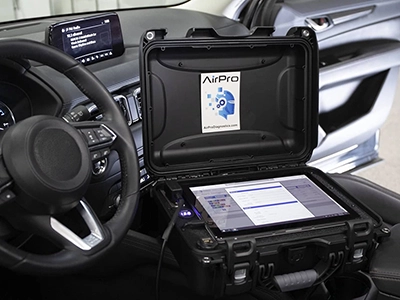
AirPro Self-Service Pre-Scans change that workflow. Connect the AirPro device before the work starts. The scan identifies installed ADAS systems and flags any calibration requirements triggered by the planned repair, before the technician picks up a wrench. That information goes on the repair order. The customer is informed. The calibration is planned into the visit, not discovered after the car is already done.
Self-Service Pre-Scans are included in every AirPro Flex plan. Assisted Inspections, with a US-based Brand Specialist live on every scan, are included in every AirPro Assist plan.
See How It Works in 3 Simple Steps
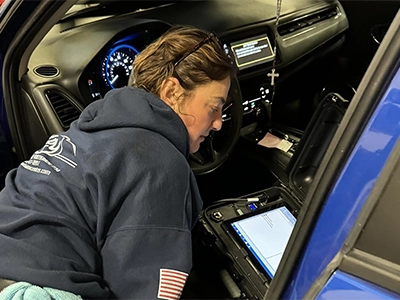
Connect
Your technician connects the AirPro device to the vehicle in your bay. One click opens an assist when the work calls for one.
Scan
Pre-scans, Diagnostic Scans, and Completion Scans run on the AirPro device with brand-authenticated tooling. A US-based Brand Specialist with in-depth experience on the brand joins live when the procedure calls for an expert in the loop.
Document
Documentation generates automatically against the OEM position statement, timestamped, and aligned to DRP audit requirements.
AirPro does not have direct relationships or agreements with insurance companies. We support all our customers in meeting their DRP compliance and documentation requirements, and our customers usually participate in DRP programs, including State Farm, Allstate, GEICO, Progressive, and USAA.
Two Ways to Add ADAS to Your Shop
AirPro Flex
Starting at $299/mo
Your technicians run the scans. A US-based Brand Specialist is available on demand when they hit a wall, an unfamiliar OEM, an unusual fault code, or a calibration that needs expert eyes. The right entry point if your techs are ready to lead the work.
AirPro Assist
Starting at $475/mo
A US-based Brand Specialist is live on every single scan, interpreting codes, flagging every calibration requirement, and generating all documentation from start to finish. Zero ADAS expertise required from your shop.
Not sure which fits? If your technicians are ready to run scans and want expert backup when they need it, start with Flex. If you want a Brand Specialist guiding every single scan from day one with no ADAS knowledge required from your team, start with Assist. An AirPro Representative can match you to the right plan based on your scan volume.
US-Based Brand Specialists, One Click Away
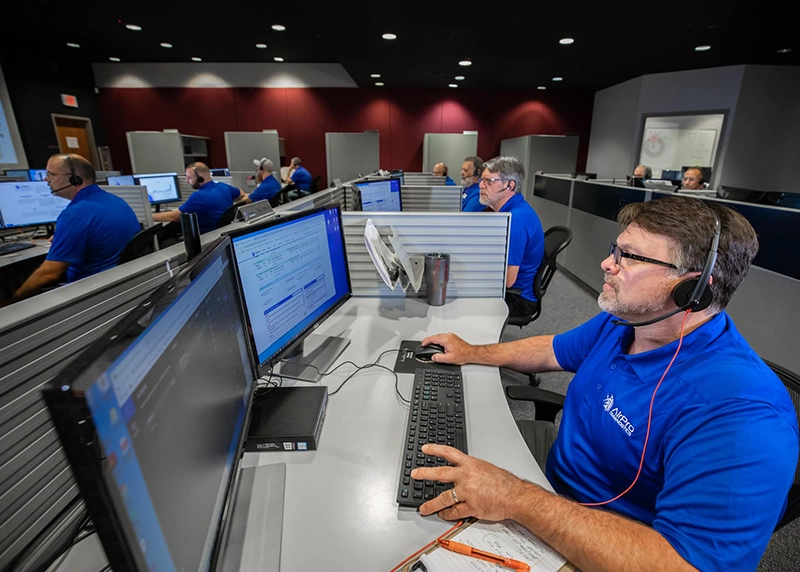
This is not a remote call center. AirPro’s technicians are US-based Brand Specialists who perform ADAS calibrations across every major OEM platform daily. They know the vehicles, the procedures, and the documentation requirements, because it is all they do.
On AirPro Flex, a Brand Specialist is available on demand. Request one when your tech hits an unfamiliar OEM, an unusual fault code, or a calibration that needs expert eyes. On AirPro Assist, a Brand Specialist is live on every scan. No request needed.
No script. No call tree. No transfer to a supervisor. The Brand Specialist on the line is the one with hands-on, daily experience on the brand in front of you.
What You Get With AirPro
AirPro Device, included free. No upfront hardware costs. Ships to your shop, ready on day one.
Scanning, diagnostics, calibrations, and module programming. One device for the full electronic side of the job.
Self-Service Pre-Scans (Flex) or Assisted Inspections (Assist). Know what the vehicle needs before work starts, every time.
Documentation generated automatically. Timestamped, VIN-specific, aligned to the OEM position statement. Audit-ready on every job.
US-based Brand Specialists. On demand (Flex) or live on every scan (Assist). Brand-specific expertise, not a generic call center.
OEM-licensed software, available on request. When the work calls for it, it is there. No subscriptions or licensing for your shop to manage.
98% vehicle coverage. ICE, hybrid, PHEV, and BEV. Every major platform your shop sees.
Other Industries We Serve

Frequently Asked Questions
If there is no warning light or fault code, is a calibration still required?
Yes. Several OEM position statements are explicit that a sensor can be out of calibration after alignment, suspension, or glass work without generating a fault code or illuminating a warning light. The vehicle drives normally. The ADAS safety system does not perform as designed. Returning a vehicle in that condition creates liability for the last shop that performed the triggering work, which is why both the calibration and the timestamped documentation matter.
Which general repair services trigger an ADAS calibration?
Wheel alignment, suspension and steering repair, windshield and glass replacement, bumper removal and reinstallation, and tire-size changes can all require a calibration. The specific requirement depends on the manufacturer and the vehicle. A US-based Brand Specialist confirms the requirement against OEM service information for the specific VIN before the work runs.
What is the difference between AirPro Flex and AirPro Assist?
AirPro Flex (starting at $299/mo) is tech-led: your technicians initiate self-service scans, and a US-based Brand Specialist is available on demand when they need expert backup. AirPro Assist (starting at $475/mo) puts a Brand Specialist live on every scan, guiding your tech through codes, calibration requirements, and documentation from start to finish. No ADAS expertise required. If your techs are ready to run scans, start with Flex. If you want a specialist on every vehicle from day one, start with Assist.
Do I have to send glass work out for the ADAS calibration?
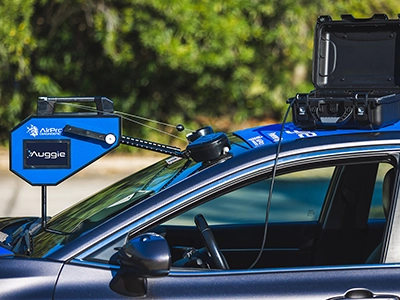
No. When a windshield replacement requires a forward-facing camera recalibration, AirPro runs it as an Assisted glass calibration in your bay, with a US-based Brand Specialist on the call and Auggie Air using augmented reality to guide the forward-facing camera calibration. The vehicle stays with you.
Does my shop need a separate scan tool?
No. The AirPro device is included and handles scanning, diagnostics, calibrations, and module programming. AirPro covers 98% of all vehicles on the road, ICE, hybrid, PHEV, and battery electric.
Does AirPro use OEM-licensed software?
The standard scan path uses brand-authenticated, best-in-class tooling. OEM-licensed software is available on request at a pay-per-use rate when the work calls for it. Your technicians do not manage software subscriptions or licensing.
Which plan fits a general repair shop?
AirPro Flex fits the shop whose technicians are ready to lead the scanning themselves, starting at $299/mo. AirPro Assist fits the shop that wants a live Brand Specialist on every scan from day one, starting at $475/mo. Both plans include the AirPro device at no upfront cost. Contact an AirPro Representative to match a plan to your actual scan volume.
Become the one-stop shop your customers are looking for.
Tell us about your shop, and we will show you how AirPro gives your team the diagnostic depth and OEM-required documentation to complete the calibrations your everyday work already triggers, without adding headcount, equipment, or sending the vehicle out.