The alignment you performed today may trigger a required ADAS calibration.
Advanced Driver Assistance Systems are now standard on most vehicles rolling into tire bays. And recently, OEM position statements have started requiring ADAS calibration after jobs that have never before had an electronic follow-up: wheel alignments, suspension work, lift kits, leveling kits, and tire size changes that alter ride height.
Eleven of the twenty-eight major North American vehicle manufacturers now require ADAS calibration after a standard wheel alignment. Some tire shops aren’t aware of this. The requirement does not show up as a warning light. There is no DTC. The vehicle drives normally. But the calibration is still required by the OEM, and the liability for the uncalibrated vehicle sits with the last shop to have touched its geometry.
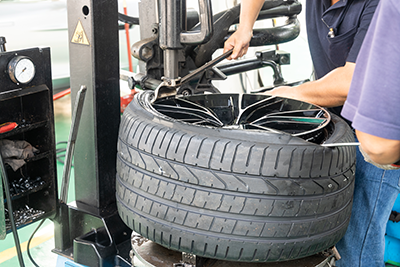
Does your shop perform any of these services?
- Wheel Alignment
Steering Angle Sensor (SAS) calibration is required after alignment on a wide range of vehicles. Electronic Stability Control and Lane Keep Assist systems also require calibration after alignment on multiple OEM platforms. 11 of 28 major OEMs explicitly require it. - Lift Kits and Leveling Kits
Any suspension modification that raises or lowers ride height shifts the aim geometry of every forward-facing camera on the vehicle. The camera is now pointing at a different reference than the OEM calibrated it to. Auggie Air recalibrates the forward-facing camera to OEM specification in the bay where the work was performed. - Suspension Work and Strut/Shock Replacement
Replacing struts, shocks, or control arms changes the effective ride height and thrust angle. Rear radar sensors, blind spot monitoring, and forward-facing cameras may all be affected depending on the extent of the geometry change. - Plus-Sized Tires and Wheel Packages
Moving to a larger diameter tire increases the vehicle’s effective ride height, shifting sensor aim angles upward. Even without a suspension modification, a significant tire size change can take forward-facing and rear-facing sensors out of OEM specification. - Steering Component Replacement
Replacing a rack, tie rod, or other steering component directly affects Steering Angle Sensor reference data. SAS recalibration is required before the vehicle is returned.
If your shop performs any of the above, ADAS calibration requirements likely apply to a portion of those vehicles today. The work is already in your workflow. A documented, OEM-aligned process should be too.
Why Wheel Alignment and Ride Height Changes Affect ADAS Systems
Advanced Driver Assistance Systems rely on a network of sensors, cameras, and radar units that are calibrated to a precise geometric reference specific to each vehicle. The Steering Angle Sensor uses a zero-degree forward reference point to determine what the vehicle considers “straight ahead.” Forward-facing cameras are aimed at a specific vertical angle relative to the vehicle’s ride height. Rear and side radar units are positioned to scan within defined horizontal and vertical windows based on the vehicle’s geometry.
When wheel alignment changes the thrust angle or toe setting, the SAS reference shifts. A sensor calibrated to a specific straight-ahead point is now reporting a different position as zero. Lane Keep Assist, Electronic Stability Control, and Adaptive Cruise Control all rely on that reference — and they inherit the error.
When ride height changes, the vertical aim of every forward-facing camera changes with it. A lift kit that raises the vehicle four inches has tilted every camera downward by the same angular offset relative to its original calibration. The system will still function, and no warning light will appear. But the camera is now scanning a different portion of the road than the OEM intended, and its detection zone no longer matches the geometry the braking and lane systems were built around.
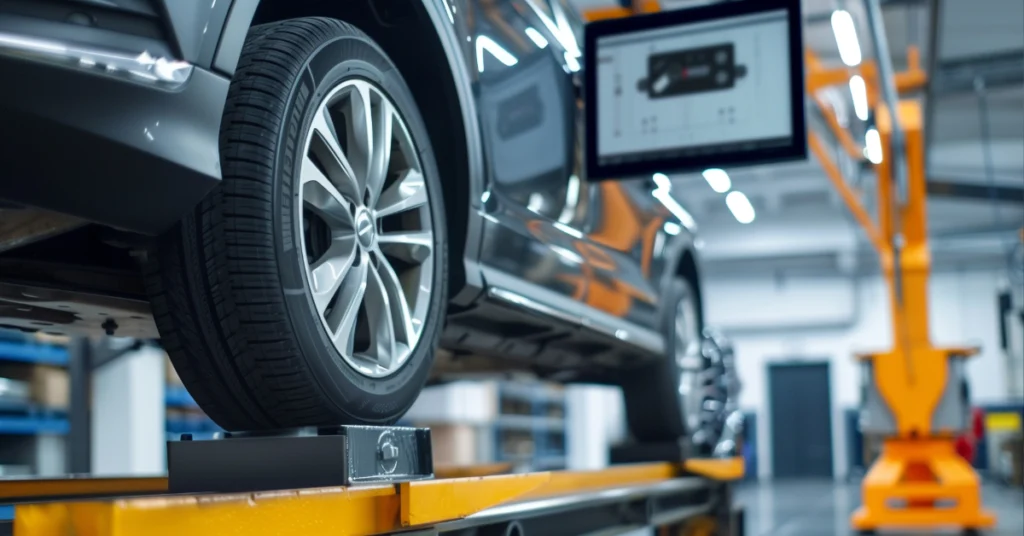
This is not a hypothetical risk. I-CAR dedicated a Repairers Realm episode to this topic in March 2024, with technical experts from Audi and BMW. One of the key questions addressed: “Is calibration still required even if ADAS appears to be operating normally after a wheel alignment?” The answer is yes, and the requirement is defined by the OEM position statement for the specific vehicle, not by whether warning indicators are active.
Two Types of ADAS Calibration. Both Triggered by Tire Shop Work.
Scan-Based Recalibrations
Wheel alignment triggers recalibration of sensors that rely on vehicle geometry as a reference. The Steering Angle Sensor, Electronic Stability Control, and Lane Keep Assist systems all require a relearn procedure after the alignment angles have been set. This is performed through the vehicle’s diagnostic port using a scan tool, with the vehicle stationary after alignment is complete.
A Brand Specialist on the AirPro platform confirms which systems require recalibration for the specific vehicle, guides the relearn procedure, and verifies the result. No guesswork about which systems are affected on which OEM platform. No risk of missing a required step and releasing an uncalibrated vehicle.
OEM brands confirmed to require scan-based ADAS calibration after standard wheel alignment include Ford, Volkswagen, Subaru, Kia, Dodge, and Jeep, among others. Specific documented examples: Honda Civic and CR-V require calibration of Lane Keep Assist and Adaptive Cruise Control after alignment. Subaru Crosstrek, Impreza, and Forester require EyeSight lane support calibration after alignment.
Forward-Facing Camera (FFC) Calibrations
Lift kits, leveling kits, lowering springs, and plus-sized tire packages change the vehicle’s ride height. Any change in ride height tilts the forward-facing camera’s aim relative to the original OEM calibration. The camera must be recalibrated to restore OEM-specified aim geometry before the vehicle is returned to the customer.
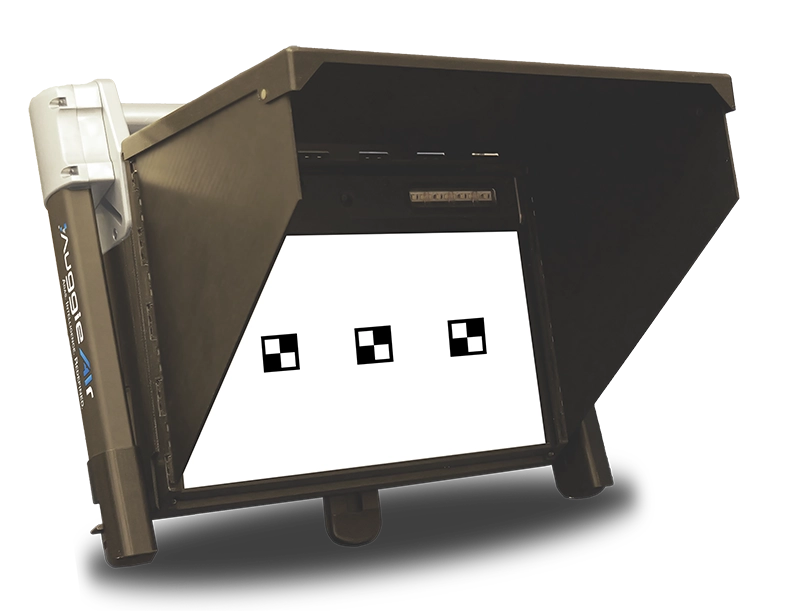
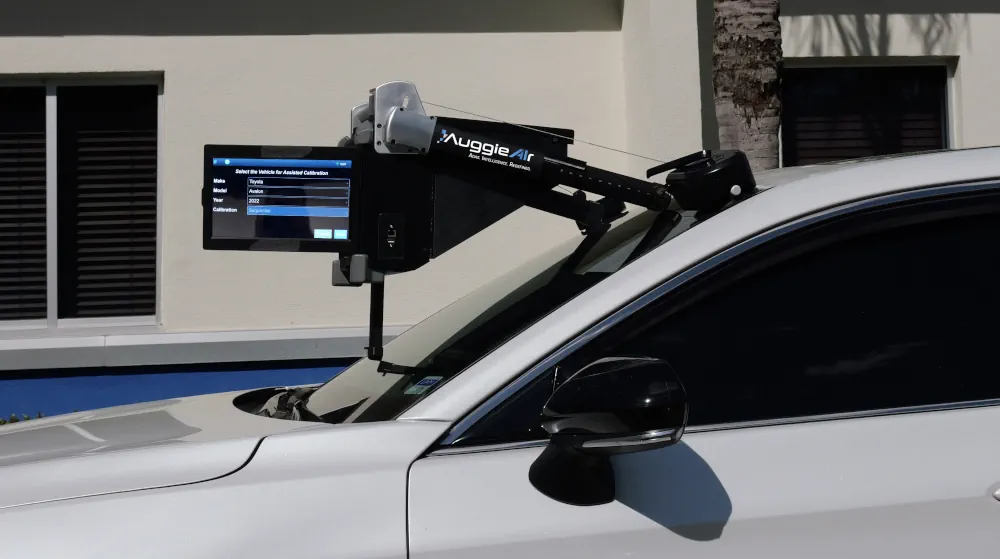
Auggie Air, AirPro’s patented digital targeting device, renders the target for forward-facing camera calibrations in the tire shop bay with no specialized equipment, no controlled lighting, and no floor space requirements beyond the vehicle itself. Mount it to the windshield, connect wirelessly to the AirPro device, and a Brand Specialist guides the procedure to OEM specification.
This matters particularly for lift shops and off-road fitment specialists: a four-inch lift kit on a Toyota Tacoma equipped with Toyota Safety Sense requires FFC recalibration. That calibration can now be performed in the same bay where the lift was installed.
Lift Kits, Leveling Kits, and Forward-Facing Camera Calibration
A customer installs a two-inch leveling kit on a Ram 1500 equipped with Forward Collision Warning. The kit raises the front of the vehicle, tilting the forward-facing camera’s view downward relative to the original calibration reference. The system still powers on. The warning light stays off. But the camera is now scanning a shorter distance ahead than it was designed to, and the braking reaction distance the system was built around no longer matches the vehicle’s actual detection range.
Traditional forward-facing camera calibration requires a physical target board staged at a precise distance from the vehicle on a level surface, in controlled lighting, with at least 250 square feet of unobstructed floor space. A tire shop that installed the lift has no path to performing that calibration in its own bay, and the customer has no reason to believe anything needs to be done after leaving.
Auggie Air changes that. It mounts to the vehicle’s windshield in two to three minutes and performs the FFC calibration wirelessly, with a US-based Brand Specialist guiding the procedure remotely. No floor targets, no lighting requirements, no level surface requirement, no 250-square-foot minimum. The footprint required is the same as the vehicle. It works in a tire bay, in a parking lot, anywhere the lift was installed.
Common lift and suspension modifications that trigger FFC calibration:
Lift kits (body lift, suspension lift, leveling kit)
Any modification that raises or alters the front ride height shifts forward-facing camera aim geometry
Lowering springs and drop spindles
Lowering the vehicle re-angles forward-facing cameras upward, compressing the near-field detection zone
Coilover replacement with height adjustment
Any height setting change after the original calibration requires FFC recalibration
Plus-sized tire fitments with significant diameter increase
A meaningful increase in tire diameter raises effective ride height — on ADAS-equipped vehicles, this shifts FFC aim geometry outside OEM specification
Strut replacement at a different ride height setting
Any strut change that alters the vehicle's final ride height affects forward-facing camera aim
No warning light. No DTC. Still required.
ADAS calibration requirements are defined by the OEM position statement for the specific vehicle and the specific repair performed. They are not triggered by warning indicators. A vehicle that has received an alignment, a lift kit, or a suspension modification on an ADAS-equipped platform may be required to receive calibration before it leaves the shop — regardless of whether any fault codes are present and regardless of whether the driver notices any change in system behavior.
In the event of an accident involving a vehicle whose ADAS system failed to perform as designed, the investigation will look at who last serviced the vehicle’s geometry. The tire shop or suspension installer that performed the work without required calibration is the last professional to have touched the system. Industry guidance is clear: liability follows the last technician to perform work that triggers a calibration requirement.
AirPro records every remote diagnostic interaction, both the phone call and the screen session, going back to 2016. Every calibration generates documentation aligned to the OEM position statement, timestamped, and stored in ORION. That documentation is what protects your shop when a vehicle’s service history is reviewed.
OEM ADAS Calibration Requirements: Alignment, Suspension, and Ride Height
OEM position statements define which ADAS calibrations are required based on the service performed. For tire shops, the triggering categories are wheel alignment, suspension component replacement, ride height modification, and significant tire size changes. Requirements are based on the work performed and the vehicle’s equipped systems, not on warning lamp status. The tables below reflect requirements as published in OEM service information and I-CAR Repairability Technical Support resources.
Disclaimer: The information provided on this page is for educational purposes only. Always validate against the OEM’s authorized positioning statements and directives at their own website or an authorized organization’s website. AirPro may not always have the latest information on this website.
General Motors
Brands: Chevrolet, Buick, GMC, Cadillac
WHEN CALIBRATION IS REQUIRED
GM’s ADAS position statement requires calibration after services that affect sensor mounting geometry. Wheel alignment, suspension component replacement, and ride height modifications are all identified trigger categories when the vehicle is equipped with camera or radar-based ADAS systems. GM service information defines which systems require recalibration for the specific vehicle configuration.
CALIBRATION REQUIRED
Steering Angle Sensor relearn after wheel alignment. Forward-facing camera recalibration after ride height change (lift or leveling work). Front radar recalibration after front suspension work affecting sensor mounting geometry. Specific requirements vary by model and equipped ADAS package.
Sources:
GM Advanced Driver Assistance Systems Consideration position statement (March 2026); GM service information for alignment and suspension-related ADAS calibration procedures; I-CAR RTS model-specific resources.
Ford / Lincoln
Brands: Ford, Lincoln
WHEN CALIBRATION IS REQUIRED
Ford’s May 2026 ADAS Repair Technical Imperatives position statement requires ADAS evaluation and calibration after any repair involving components within the field of view or mounting zone of ADAS sensors. Wheel alignment, suspension work, and ride height modifications are explicitly addressed. Ford is among the 11 of 28 major OEMs confirmed to require ADAS calibration after standard wheel alignment.
CALIBRATION REQUIRED
Steering Angle Sensor relearn after wheel alignment. Forward-facing camera recalibration after suspension work or ride height change on Co-Pilot360-equipped vehicles. Adaptive Cruise Control and Pre-Collision Assist sensor recalibration after front suspension component replacement. FDRS procedures apply for specific model calibration steps.
Sources:
I-CAR CRN-2426, Ford/Lincoln Position Statement, ADAS Integrity And Repair Technical Imperatives (May 2026); Ford FDRS calibration procedures for alignment and suspension-related ADAS recalibration.
Toyota / Lexus
Brands: Toyota, Lexus
WHEN CALIBRATION IS REQUIRED
Toyota requires inspection and recalibration of ADAS sensors following services that affect ride height, thrust angle, or front suspension geometry. Toyota Safety Sense forward recognition camera calibration is required after ride height changes. SAS recalibration requirements vary by model and ADAS package. Calibration procedures follow the OEM repair manual for the specific vehicle.
CALIBRATION REQUIRED
Forward recognition camera recalibration after ride height modification (lift, leveling, or lowering on Toyota Safety Sense-equipped vehicles). Steering Angle Sensor relearn after wheel alignment on applicable models. Dynamic calibration drive cycle required on some models after static FFC calibration.
Sources:
Toyota/Lexus ADAS service requirements for alignment and suspension work; Toyota Safety Sense calibration procedures; I-CAR RTS model-specific resources.
Honda / Acura
Brands: Honda, Acura
WHEN CALIBRATION IS REQUIRED
Honda requires calibration of Lane Keep Assist and Adaptive Cruise Control systems after wheel alignment on Civic, CR-V, and other Honda Sensing-equipped models. Honda’s position statement notes that driver assistive systems may not display DTCs even when calibration is required. Forward-facing camera calibration is required after ride height modification on Honda Sensing-equipped vehicles.
CALIBRATION REQUIRED
Lane Keep Assist and Adaptive Cruise Control recalibration after wheel alignment on Honda Civic, CR-V, and other Honda Sensing-equipped models. Forward-facing camera recalibration after ride height change. Steering Angle Sensor relearn on applicable platforms. Post-calibration verification scan required.
Sources:
Honda/Acura ADAS calibration position statement; I-CAR CRN-1126, Honda/Acura Position Statement; Honda service information for alignment and suspension-related calibration.
Subaru
Brands: Subaru
WHEN CALIBRATION IS REQUIRED
Subaru is among the confirmed OEMs requiring ADAS calibration after wheel alignment. EyeSight lane support calibration is required after alignment on Crosstrek, Impreza, and Forester models. EyeSight rear side radars are specifically affected by ride height changes. Subaru’s position statement requires calibration even if EyeSight warning indicators are not illuminated.
CALIBRATION REQUIRED
EyeSight stereo camera calibration after ride height modification. EyeSight lane support calibration after wheel alignment on Crosstrek, Impreza, Forester, and other EyeSight-equipped models. Rear side radar recalibration after suspension work affecting ride height (affects Rear Cross Traffic Alert and blind spot systems).
Sources:
I-CAR CRN-1623, Subaru EyeSight calibration requirements; Subaru service information for alignment and suspension-related ADAS calibration.
Hyundai / Kia / Genesis
Brands: Hyundai, Kia, Genesis
WHEN CALIBRATION IS REQUIRED
Kia is among the confirmed OEMs requiring ADAS calibration after wheel alignment. Hyundai, Kia, and Genesis require SmartSense and Drive Wise system recalibration after wheel alignment and after suspension work that changes ride height. Rear Cross-Traffic Collision Avoidance radar sensors are specifically affected by ride height changes on these platforms.
CALIBRATION REQUIRED
Forward-facing camera recalibration after ride height modification. Rear Cross-Traffic Collision Avoidance radar recalibration after suspension work affecting ride height. Steering Angle Sensor relearn and Lane Keeping Assist calibration after wheel alignment on applicable models.
Sources:
Hyundai/Kia/Genesis ADAS calibration requirements for alignment and suspension services; I-CAR RTS model-specific resources.
Nissan / INFINITI
Brands: Nissan, INFINITI
WHEN CALIBRATION IS REQUIRED
Nissan requires radar and camera recalibration after suspension repairs that alter vehicle ride height or geometry and after wheel alignment procedures on ProPILOT Assist-equipped vehicles. Front radar recalibration is required after front suspension component replacement. ProPILOT-equipped models require post-alignment calibration and a verification drive cycle.
CALIBRATION REQUIRED
Front radar recalibration after front suspension work. ProPILOT Assist camera and radar calibration after wheel alignment on equipped models. Post-calibration road test required on ProPILOT-equipped vehicles to complete dynamic learning procedure. Safety Shield 360 radar sensors require recalibration after ride height changes affecting rear sensor geometry.
Sources:
I-CAR CRN-420, Nissan Position Statement; Nissan/INFINITI service information for alignment and suspension-related ADAS calibration.
Stellantis
Brands: Jeep, Dodge, Chrysler, Ram, FIAT, Alfa Romeo
WHEN CALIBRATION IS REQUIRED
Dodge and Jeep are among the confirmed OEMs requiring ADAS calibration after wheel alignment. Stellantis requires ADAS recalibration after services affecting sensor mounting geometry, including wheel alignment, suspension component replacement, and ride height modification. Security gateway authentication is required for diagnostic and calibration access on late-model Stellantis vehicles.
CALIBRATION REQUIRED
Steering Angle Sensor relearn and Forward Collision Warning camera recalibration after wheel alignment on Dodge, Jeep, Ram, and Chrysler vehicles with camera-based ADAS. Forward-facing camera recalibration after lift kit installation or suspension modification affecting ride height. Security gateway authentication handled through AirPro brand-authenticated tooling.
Sources:
I-CAR FCA/Stellantis ADAS Information Hub; Stellantis service information for alignment and suspension-related ADAS recalibration; Stellantis security gateway requirements.
BMW / MINI
Brands: BMW, MINI
WHEN CALIBRATION IS REQUIRED
BMW was a featured OEM expert in I-CAR’s March 2024 Repairers Realm episode on ADAS calibrations after wheel alignment. BMW has specific requirements including: some BMW sensors require calibration after rear toe adjustment but not after front adjustments, depending on sensor type and location. Security gateway authentication is required for calibration access. Thrust angle verification is required before FFC calibration on alignment and suspension repairs.
CALIBRATION REQUIRED
Rear-specific radar calibration after rear toe adjustment on equipped models. Forward-facing camera and Active Driving Assistant calibration after ride height modification. SAS relearn after wheel alignment. Thrust angle must be verified before FFC calibration can be completed. Security gateway authentication handled through AirPro brand-authenticated tooling.
Sources:
I-CAR CRN-2098, I-CAR Repairers Realm: ADAS Calibrations After Wheel Alignment (March 2024), BMW panel; I-CAR CRN-2337, BMW Vehicles OEM Calibration Requirements; BMW security gateway and diagnostic access requirements.
Tesla
Brands: Tesla
WHEN CALIBRATION IS REQUIRED
Tesla Model 3, Model Y, Model S, and other Tesla vehicles require 4-wheel alignment before servicing multiple ADAS features. Steering Angle Sensor, Electronic Stability Control, Lane Support Assist, and Autopilot steering all require alignment verification as a prerequisite before calibration can be completed. Tesla’s calibration requirements are among the most comprehensive for alignment-related ADAS service.
CALIBRATION REQUIRED
SAS recalibration required after wheel alignment. ESC, LSA, and Autopilot steering calibration require 4-wheel alignment as a prerequisite step before calibration can be performed. Forward-facing camera recalibration after ride height modification on Autopilot-equipped vehicles. Post-calibration verification procedure required.
Sources:
Tesla service information for alignment and ADAS calibration procedures; Revv ADAS, ADAS Calibrations and 4-Wheel Alignment (June 2025); I-CAR RTS model-specific resources.
Source information compiled from I-CAR Repairability Technical Support (RTS) published articles, OEM position statements, and OEM service information, available at rts.i-car.com and oem1stop.com. Content current as of June 2026. Always verify against current OEM service information for the specific vehicle being serviced.
See How It Works in 3 Simple Steps
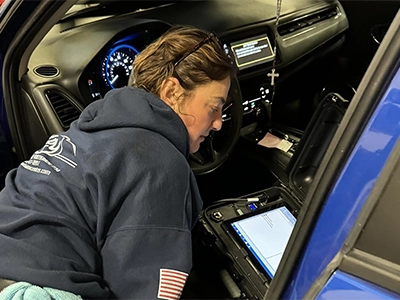
Connect
Your technician connects the AirPro device to the vehicle in your bay. One click opens an assist when the work calls for one.
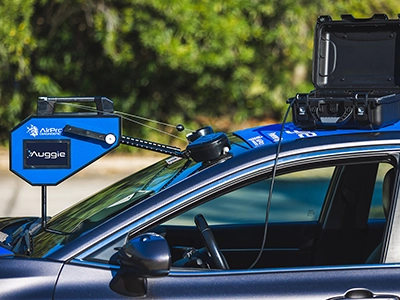
Scan
Pre-scans, Diagnostic Scans, and Completion Scans run on the AirPro device with brand-authenticated tooling. A US-based Brand Specialist with in-depth experience on the brand joins live when the procedure calls for an expert in the loop.
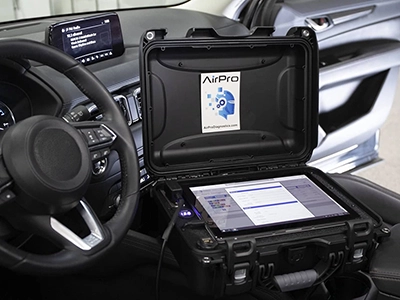
Document
Documentation generates automatically against the OEM position statement, timestamped, and aligned to DRP audit requirements.
AirPro does not have direct relationships or agreements with insurance companies. We support all our customers in meeting their DRP compliance and documentation requirements, and our customers usually participate in DRP programs, including State Farm, Allstate, GEICO, Progressive, and USAA.
Two Ways to Build Your AirPro Program
AirPro Flex
Self-Inspection Scans on the AirPro device, your technicians run in-house. Device included. Brand Specialist support is one click away when the codes call for it.
AirPro Assist
Expert-guided diagnosis on every vehicle. A US-based Brand Specialist on the call from the first DTC, for the pre-scan, the Diagnostic Scan, and the Completion Scan that closes the file.
Not sure which plan fits your shop? If your technicians are comfortable running scans and calibrations with expert guidance available on demand, start with Flex. If you want a Brand Specialist confirming every calibration requirement and guiding every procedure from start to finish, start with Assist. An AirPro Representative will walk through your service volume and the types of work your shop performs to recommend the right fit.
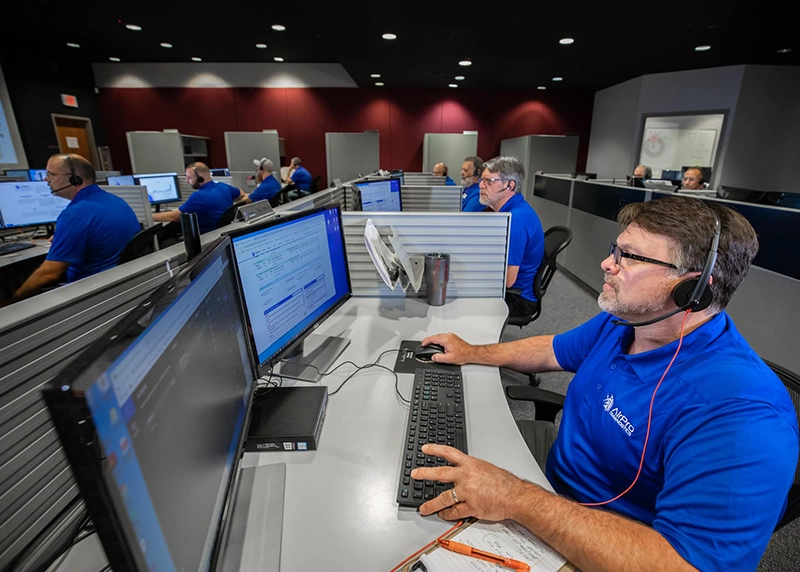
US-Based Brand Specialists. On Every Scan.
AirPro’s Brand Specialists are US-based and assigned by OEM. The Specialist joining your technician’s session has daily, in-depth experience on the brand of vehicle on the lift. When your shop performs an alignment on a Subaru with EyeSight, the Specialist on the call knows whether that specific model requires lane support calibration after alignment and exactly how to run the procedure. When a customer’s lifted Ram comes in for a tire service, the Specialist knows whether that truck’s Forward Collision Warning system needs FFC recalibration and can guide it without your tech needing any prior ADAS knowledge.
This matters for tire shops because the calibration landscape across brands is not uniform. BMW sensors can require calibration after rear toe adjustment but not after front adjustments. Tesla requires alignment verification as a prerequisite before certain calibrations can proceed. Ford’s requirements differ by model and ADAS package. Working through those variations vehicle by vehicle, without expert guidance, creates the conditions for missed calibrations and the liability that follows.
On AirPro Flex, your technician has that expertise one click away throughout the job. On AirPro Assist, the Specialist is live on every scan from the moment the device connects, confirming what is required, guiding the procedure, and closing out the documentation before the vehicle goes back to the customer.
Every session is recorded. Every calibration record is stored in ORION. If a vehicle’s service history is ever reviewed, the documentation is there.
What you get with AirPro
- AirPro Device included free. No upfront hardware costs. Ships ready to use. Covers pre-service scanning, post-service verification, and all scan-based ADAS calibrations.
- Pre-Service and Post-Service Scanning. Pre-service scan documents the vehicle’s ADAS status before work begins. Post-service scan confirms all systems are operating without fault codes after calibration is complete.
- Scan-Based ADAS Calibrations via Brand Specialist. Steering Angle Sensor relearns, Electronic Stability Control, Lane Keep Assist, Adaptive Cruise Control, and other scan-based recalibrations guided by a US-based Brand Specialist with in-depth OEM experience on the specific brand.
- Auggie Air for Forward-Facing Camera Calibrations. AirPro’s patented digital targeting device renders the target for FFC calibrations triggered by ride height changes: lift kits, leveling kits, lowering modifications, and plus-sized tire packages. Mounts to the windshield in two to three minutes. No bay requirements, no floor targets, no controlled lighting. Works indoors or outdoors.
- US-Based Brand Specialists, one click away. Assigned by brand. Deep expertise on alignment and suspension-related ADAS calibration requirements across every major OEM. Response within 10 minutes of every request, most within 90 seconds.
- OEM position statement documentation on every job. Every scan and calibration generates timestamped, VIN-specific records aligned to the OEM position statement. Documentation is the protection for your shop in the event a vehicle’s service history is reviewed.
- ORION – all records centralized. Every pre-scan, post-scan, and calibration record stored in one platform. Accessible by VIN for any service history inquiry.
- Security gateway authentication included. Late-model Stellantis, BMW, and other vehicles requiring gateway authentication handled through AirPro brand-authenticated tooling on the standard scan path.
Other Industries we Serve

Frequently Asked Questions
Why would a tire shop need to do ADAS calibrations?
Several of the services tire shops perform regularly are now defined as ADAS calibration triggers by OEM position statements. Wheel alignment is the most common: 11 of 28 major North American vehicle manufacturers explicitly require ADAS calibration — primarily Steering Angle Sensor recalibration — after a standard wheel alignment. Lift kits, leveling kits, lowering modifications, suspension component replacement, and significant tire size changes can also trigger forward-facing camera recalibration. These requirements apply based on the service performed and the vehicle’s equipped ADAS systems, not based on warning indicator status.
There are no warning lights and the vehicle drives fine. Is calibration still required?
Yes. ADAS calibration requirements are defined by the OEM service information for the specific vehicle and the specific service performed. They are not triggered by fault codes or warning indicators. A forward-facing camera that has been tilted by a ride height change will continue to function and report no errors. The system still powers on, the display shows no warnings, and the vehicle drives normally. But the camera’s detection geometry no longer matches the OEM specification it was calibrated to. The calibration requirement exists regardless of whether any observable symptom is present.
Does installing a lift kit really require a camera calibration?
Yes, on any vehicle equipped with a forward-facing ADAS camera. A lift kit changes the vehicle’s ride height, which changes the vertical aim angle of every forward-facing camera. The camera was calibrated to a specific aim reference at the original ride height. After the lift, that reference has shifted. The OEM position statement for the vehicle requires recalibration to restore the camera’s aim to specification. Auggie Air performs that recalibration in your bay, in two to three minutes of setup, with no specialized equipment, no dedicated floor space, and no controlled lighting requirement.
What specific brands require calibration after wheel alignment?
Ford, Volkswagen, Subaru, Kia, Dodge, Jeep, and BMW are among the confirmed OEMs requiring ADAS calibration after standard wheel alignment. Honda requires calibration of Lane Keep Assist and Adaptive Cruise Control after alignment on Civic and CR-V models. Subaru requires EyeSight lane support calibration after alignment on Crosstrek, Impreza, and Forester models. Tesla requires alignment verification as a prerequisite before calibrating SAS, ESC, and Autopilot steering. The specific systems requiring recalibration vary by brand, model, and ADAS package — a Brand Specialist on the AirPro platform confirms the exact requirement for the vehicle on the lift.
What happens if we perform an alignment and do not do the required calibration?
The vehicle leaves your shop with an ADAS system that has been taken out of OEM specification by the work you performed. If that system later fails to perform as designed in a safety event, the investigation of the vehicle’s service history will identify your shop as the last professional to have serviced its geometry. Industry guidance is explicit: liability follows the technician who performed the triggering work without the required calibration. The absence of a warning light is not a defense. Proper documentation of the calibration performed is what protects the shop.
What is the difference between AirPro Flex and AirPro Assist?
AirPro Flex (starting at $349/mo) is tech-led: your technicians run the pre-service scan, calibrations, and post-service scan, with a US-based Brand Specialist available on demand when they need confirmation of requirements or guidance on a procedure. AirPro Assist (starting at $525/mo) puts a Brand Specialist live on every scan from the moment the device connects, confirming every calibration requirement for the work performed, guiding the procedure step by step, and closing out the documentation before the vehicle leaves. No ADAS expertise required from your technician on either plan.
Does AirPro handle all the brands our shop services?
AirPro provides 98% vehicle coverage across all major domestic, European, and Asian brands. Brand Specialists are assigned by brand and have daily, in-depth experience on the OEM platforms they support. Security gateway authentication for late-model Stellantis, BMW, and other vehicles requiring it is handled through AirPro’s brand-authenticated tooling on the standard scan path.
Your tire shop work is triggering OEM-required ADAS calibrations. Now your technicians can handle the job without a sublet.
Tell us about your shop and the services you perform. We’ll show you how Auggie Air and AirPro Diagnostics US-based Brand Specialists add ADAS calibration to the work already in your workflow, from alignment-triggered SAS relearns to forward-facing camera recalibrations after lift kits and suspension work. Full OEM-aligned documentation on every job.