
Case Study · Dynamic Forward-Facing Camera Calibration
The Forward-Facing Camera Calibration That Was Almost Missed
Both doors, the fender, the whole side were repaired but the windshield was never touched.
Jordan McNeese · US-based Brand Specialist, AirPro Diagnostics
Summary
A collision shop finished a full passenger-side repair on a pickup: both doors and the fender. No windshield work, no camera removed. AirPro Brand Specialist Jordan McNeese determined that the damage exceeded the manufacturer’s threshold, and a dynamic forward-facing camera calibration was required. He also cleared three unrelated faults out of the repair file in the same eleven-minute call.
At a Glance
| Service | Dynamic Forward-Facing Camera Calibration |
|---|---|
| Vehicle | Full-size pickup with 360 surround view, blind spot monitoring, and park assist |
| Repair context | Passenger-side collision repair: both doors and fender replaced; windshield untouched |
| Presenting problem | Post-repair scan returning multiple faults; calibration requirement unclear to the shop |
| AirPro Brand Specialist | Jordan McNeese |
| Call duration | 11 minutes |
| Key determination | Damage exceeded outer-panel cosmetic threshold; forward-facing camera calibration required |
| Also resolved in the same call | Window motor relearn completed; two unrelated faults documented and excluded; ambient air temperature sensor verified and reset |
| Outcome | Dynamic calibration launched; combined calibration and post-scan report issued |
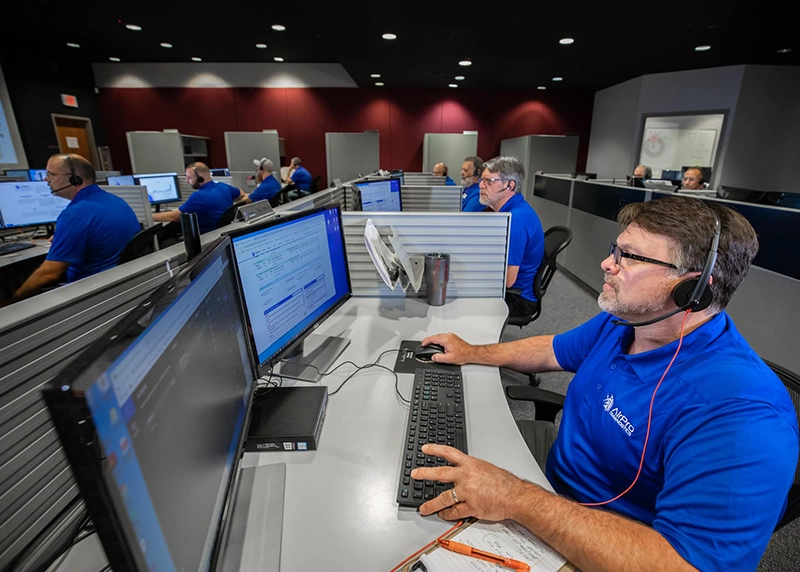
The Brand Specialist on this call
Jordan McNeese
Jordan McNeese is a US-based AirPro Diagnostics Brand Specialist. He has worked in repair shops and performed ADAS diagnostics and calibrations himself, and he works the brands he knows in depth. On every AirPro calibration, the Brand Specialist runs the procedure alongside the shop’s technician, from setup through verification, and confirms the result against the OEM position statement.
The Situation
The truck was hit on the passenger side. The shop replaced both doors and the fender, or as the technician put it, “the whole side, basically, almost.”
Nothing happened to the windshield. Nobody removed the forward-facing camera. On a lot of repair plans, that is where the ADAS conversation ends.
His post-repair scan came back with several faults, so he got me on the line. What followed was eleven minutes that cleaned up the repair file and caught a calibration requirement the shop had not planned for.
First, a Fault That Would Have Stalled the Job
I started with the one thing standing between the truck and a clean scan. There was a fault that was not going to clear until we got that window sorted out. The passenger window motor had not learned its calibration, which usually happens when it has been worked on.
Replacing a door means the window motor loses its learned positions, and the auto up/down feature stops working until it relearns them. It is a small thing that produces a fault that will not clear no matter how many times you tell it to.
I walked him through the window motor relearn over the phone, a specific key-on sequence of running the window to each limit and holding it there, then had him function test it both directions before either of us moved on. Auto up worked. Auto down worked. The fault cleared on its own.
Elapsed time: about a minute. No dealer visit, no second appointment, no fault sitting in the file with nobody sure what to do about it.
Sorting What Belonged to the Repair from What Didn’t
In his words, “she leaves as she came in.”
Two other faults were live, and I treated them differently from each other.
A tire pressure sensor was reporting low voltage. I have seen that pattern plenty on that platform, and it commonly resolves once the vehicle is driven. More importantly, I checked it against the pre-scan. It had come in that way. I marked it unrelated and documented it as pre-existing.
Then he noticed the driver’s-side power running board was not extending. I asked him the one question that separates an electrical problem from a mechanical one: is it attempting to work? If you can hear it trying and it still is not moving, it is not a sensor. That is mechanical or motor.
I asked whether the shop had worked in that area. They had not. So I told him what I would expect to find: it is a scissor bracket, and it crimps easily if it gets pushed one way or the other. A curb strike or sliding off the road in the snow will do it.
Then I made the point that protects the shop. I did not see a fault for any of the sidestep hardware, so I read it as pre-existing, and something mechanical or motor related is not necessarily going to throw a fault in the first place.
I confirmed it from the pre-scan, and he confirmed it back: the truck came in with the tire pressure fault and nothing else. In his words, “she leaves as she came in.”
That is a documented, defensible position on a customer complaint the shop did not cause, established before the vehicle was delivered, not argued about afterward.
Verify, Don’t Just Clear
An ambient air temperature fault was also present. Clearing it would have taken a second. I didn’t.
Our standard is to go check it, verify that it is working, and then run the reset to make sure it reads correctly on the dash.
So I went looking for the live sensor reading. The software organized it differently than I expected, so it took longer than I would have liked, but I kept hunting until I found it and compared the sensor value against what the dash was displaying. Two degrees apart. I ran the reset and watched it correct.
That is what verifies it is not going to come back reading negative forty. Because the one time you don’t check that with somebody, they call you right back and tell you the car says it is icy outside.
Then, during the function test a few minutes later, he mentioned the passenger mirror had been off and the blind spot indicator had come on. That is when it connected for me. The ambient temperature sensor on these is usually in the mirror.
The fault wasn’t random. The mirror was in the repair area. Knowing where a manufacturer puts that sensor turned an unexplained code into a closed loop.
The Determination That Mattered
No one touched the windshield. No one removed the camera. The trigger was the severity of the impact.
With the file clean, I turned to the question the shop hadn’t asked.
The criteria say that if the damage exceeded outer-panel cosmetic distortion, it needs a forward-facing camera calibration, to ensure it wasn’t hit hard enough to jar or misalign the camera’s view. So it comes down to the amount of damage sustained on the vehicle. Anything basically beyond ding, dent, scratch, or a refinish.
I asked what had been replaced. Both doors on the bedside, the front door, the fender. The whole side. So yes, that truck needed the camera calibration.
This is critical. No one touched the windshield. No one removed the camera. The trigger was the severity of the impact, the possibility that a hit hard enough to require replacing an entire side of the vehicle was also hard enough to disturb what the forward-facing camera sees.
A shop working from the obvious triggers (windshield replaced, camera removed) releases that truck without the calibration. The camera reports no fault. The dash shows no light. The lane keeping system operates on a view of the road that may no longer match what the vehicle believes it is looking at.
Closing the Repair Out
Before the drive, I gave him the ADAS function test list for what the repair had touched: all four surround view cameras (front, rear, and both sides) plus blind spot, park assist, and any exterior lighting in the repair area. He ran it and reported the 360-view and blind spot were both good.
I asked how the shop wanted its documentation, combined or separate, and built the report the way they asked, with the fault clearing attached to the calibration.
Then I set up the dynamic calibration, put the camera into learn mode, had him confirm auto start/stop was off, and briefed the drive: an open road with clear lane markings, above the speed the procedure requires, until the system reports ready.
And then the part most people skip. I told him to turn on lane departure and function test it. Make sure it beeps or vibrates the seat and basically complains at you when you get close to an outside line. Then you know the system is working.
Confirming the system is calibrated is not the same as confirming the driver will actually be warned. I want both.
Why This Is Different
Eleven minutes produced: an electrical relearn completed over the phone, two pre-existing conditions documented and excluded, a sensor verified rather than cleared, a calibration requirement identified that the repair plan had missed, a function test list specific to the damage, and a documentation package built the way the shop wanted it.
None of that comes from equipment. It comes from having spent time in the bay.
Jordan’s notes
What I’d Tell Another Shop
- The obvious calibration triggers are not the only triggers. Windshield replacement and camera removal are the ones everyone knows. Damage severity is the one that gets missed, and on a side hit, it is the one that applies.
- Read the criteria against the actual repair. “Anything beyond ding, dent, scratch, or refinish” is a threshold to apply at repair planning, before the vehicle is torn down.
- Verify sensors instead of clearing codes. A code that clears and comes back is a comeback. A sensor confirmed against live data is closed.
- Document pre-existing conditions while the vehicle is still in your bay. A fault confirmed against the pre-scan is a defensible position. The same fault raised at delivery is an argument.
- Function test the warning, not just the calibration. The customer’s safety depends on the alert actually happening.
- Catch it at repair planning. A calibration identified during the estimate is a scheduled line item. The same calibration identified at delivery is a delay.
More case studies
Real calls, real vehicles, real results
Case Study: What a Clean EyeSight Calibration Actually Looks Like
Eight minutes on a 2020 Outback, and the six habits that made it possible.
Case Study: The Year the Park Sensors Started Needing Calibration
Eight model years of plug and play, then a change nobody announces on the outside of the truck.
Case Study: The Radar They Replaced for Nothing
A brand-new radar came out of the box eight degrees off, and the one before it probably had too.
Be the one-stop shop your customers are looking for
Meet with an AirPro rep to find the best solution for your business today. Become the standout amongst your competitors.